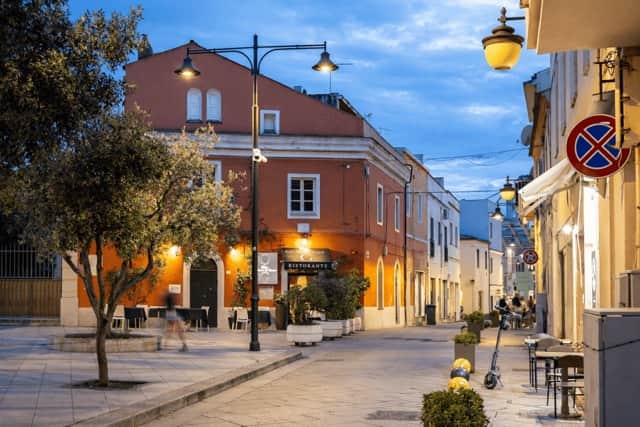
Olbia's centro storico after private renovation investment. Foto RENTAL12
The Gallura Paradox Exposed: How Private Investment Saved Olbia's Centro Storico — and Why Blaming Short-Term Rentals Gets the Data Wrong
Quick Guide
On 20 May 2026, olbia.it published an article blaming short-term rentals for Olbia’s housing challenges. The article didn’t check the data. Olbia has 10,777 empty homes and only 3,128 STR listings. The housing shortage comes from 40% population growth without new construction, not vacation rentals occupying 7.5% of stock. Renovation costs run €2,500/sqm, making €3,000/sqm sale prices a loss. The article’s primary quoted expert is a hotel lobby vice-president whose financial conflict of interest is never disclosed. Every claim below is sourced. Every source is numbered. The original article provides neither.

What you’re reading: On 20 May 2026 — one day after Delta Air Lines announced its historic first-ever New York JFK to Olbia direct route — olbia.it published an article titled “Il paradosso della Gallura” blaming short-term rentals for housing unaffordability. The timing is not coincidental: rather than celebrating a milestone that puts Olbia on the transatlantic map, a subsidized micro-publisher that also runs an online supermarket chose to piggyback on the biggest aviation news in Sardinia’s recent history to push an anti-tourism narrative paid for by hotel-industry interests. The article quoted a hotel lobby vice-president as a neutral expert, cited no ISTAT data, provided no national benchmarks, and disclosed no conflicts of interest. This is what happens when an interior architecture graduate writes about macroeconomics without checking the numbers. Below is the data she didn’t look up, the sources she didn’t cite, and the math she didn’t do. Every claim is numbered. Every source is linked.
1. The Real Paradox: 10,777 Empty Homes vs. 3,128 Short-Term Rentals
Quick answer: Olbia has 10,777 empty residential units (26% of housing stock) against only 3,128 short-term rental listings. The housing shortage is caused by 40% population growth without matching construction, not by vacation rentals that occupy just 7.5% of the housing stock. A journalist — or rather, someone who writes articles for a subsidized micro-publisher — could have found this in five minutes on ISTAT’s website.
ISTAT’s 2021 permanent census [1] records 41,370 total housing units in Olbia, of which 10,777 sit empty — unoccupied, unrented, unused. AirDNA’s current market data [2] reports 3,128 active short-term rental listings across the entire Olbia municipality. The ratio is 3.4 empty homes for every single STR listing.
Even in the extreme scenario of eliminating every short-term rental overnight, Olbia would still have 7,649 vacant homes. As we documented in our comprehensive analysis of the STR housing myth, Sardinia has 312,423 vacant homes — 30.2% of the island’s housing stock sitting empty [30]. STRs represent just 1.4% of Italy’s total housing stock nationally. The article’s framing — that STRs are “draining” housing supply — requires ignoring the 10,777 empty units that have nothing to do with tourism.
The IRPET study from Tuscany — one of Italy’s most tourism-heavy regions — found that converting all STRs to long-term rentals would increase supply by less than 10%. In Olbia, it would be even less. The housing problem is structural: insufficient construction combined with Italy’s dysfunctional 4+4 rental law that makes long-term renting financially suicidal for landlords — an 18-month eviction process for non-paying tenants, in a country where 9.5 million homes sit empty nationally [22].
3,128 STR listings = 7.5% of housing stock. Even at 100% occupancy (impossible — average is 62%), this cannot explain a structural housing deficit.
40% population growth (45,000 → 62,700+) with virtually zero new residential construction. Mayor Nizzi (January 2026): the city is “waiting for new construction” [28].
3,128 listings ≠ 3,128 buildings. AirDNA counts every bookable listing, not every physical property. A B&B with 4 rooms appears as 4 separate listings. A private room where the owner lives in the same apartment appears as a listing — yet removes zero housing. AirROI’s currently-active dataset [43] reports 2,083 active STR listings for Olbia — 33% fewer than AirDNA’s trailing-twelve-month figure. Of those: an estimated 265 are private/shared room listings where the host lives on-site (12.7%, based on Alghero proxy data where 87.3% are entire-home [44]). Olbia’s Comune registers 80+ B&Bs, each averaging ~3 rooms — that is 250+ listings from roughly 80 buildings, with the owner resident. Sociometrica/Il Sole 24 Ore reports 2,958 registered private tourism structures for Olbia province [43] — a figure that includes B&Bs, affittacamere, and CAVs, many operating from the owner’s primary residence. Conservative estimate: fewer than 1,000–1,500 distinct properties could theoretically have been residential housing. The real ratio is not 10,777 empty homes vs. 3,128 STRs. It is 10,777 empty homes vs. fewer than 1,500 properties — a 7:1 ratio, not 3.4:1.
Families priced out of Olbia’s old town are migrating to Tempio Pausania, Arzachena, and San Teodoro for rents 40% lower. These are towns with minimal STR presence — the rent differential follows supply/demand fundamentals, not Airbnb listings. We showed in our 23-study analysis what happens when cities restrict STRs: Amsterdam lost €269M in host earnings. The housing problem didn’t improve. The money just disappeared.
AIGAB Survey: Only 2.2% of STR Properties in Sardinia Were Converted from Long-Term Rentals
The AIGAB Centro Studi (Italian Association of Short-Term Rental Managers — 800+ operators, 42,000+ properties nationally) presented unpublished data at EXTRA2026 in Cagliari confirming our ISTAT findings at island-wide scale [45]:
Where STR properties actually come from: inherited homes (30.4%), long-vacant properties (26.1%), previously owner-occupied (28.7%), investment purchases (12.6%), and converted from long-term rental (2.2%). More than half of all STR properties in Sardinia — 56.5% — were dead housing stock (inherited or long-vacant) before becoming vacation rentals. They were not “stolen” from residents. They were rescued from abandonment.
AIGAB also confirms that Olbia, classified as an “urban hub” alongside Cagliari and Alghero, shows “tourism integrating into the urban fabric without altering the housing equilibrium.” Delegates: Mimmo Moro (AIGAB Sardegna). Presented at EXTRA2026, Cagliari, 11 April 2026.
Disclosure: RENTAL12 is a member of AIGAB (Associazione Italiana Gestori Affitti Brevi). This survey was conducted independently by AIGAB Centro Studi and published two months before this article.
Zero properties converted from long-term rental. Every single one rescued from abandonment.
Abandoned → 2 units
Ruin → 2 duplex apartments
Family home → still family home (STR)
Abandoned English school → 4 units
Ruin → 3 units
Ruin, abandoned → 1 unit
Ruin, abandoned → 1 unit
Storage + 1 small apt → 9 apartments
Ruin, abandoned → 9 units
Ruin, abandoned → 1 house
Abandoned → 1 house
Both ruins → 4 apartments
Via Pisano went from a storage unit and one small apartment to nine residential units — a net increase in housing supply. Via Cavour 41 was a family home before, and it is a family home now — zero displacement. Every other address was a ruin or abandoned building that no one was living in. AIGAB’s 2.2% island-wide conversion rate from long-term rental? Our rate is 0%. These buildings were not “stolen” from residents. They were rescued from collapse.
2. The €3,000/sqm “Shock”: The Math Scarpellini Didn’t Do
Quick answer: Scarpellini wrote about prices rising from €1,150–1,500 to peaks of €3,000/sqm as though this were speculation. What she omits is the €1,800–2,500/sqm renovation cost between those two numbers. She describes the output price without mentioning the input cost — like complaining that a restaurant charges €15 for pasta without mentioning they bought the ingredients, hired a chef, and renovated the kitchen.
Five years ago, Olbia’s centro storico buildings were listed at €1,150–1,500/sqm on Immobiliare.it [4]. But these properties were not habitable. They required structural reinforcement, seismic upgrades to NTC 2018 standards [21], energy efficiency improvements mandated by the EU EPBD directive [20], complete electrical rewiring, new plumbing systems, and finishing works.
ANCE data [3] shows renovation costs in Sardinia running €1,800–2,000/sqm at minimum, reaching €2,500+ for historic buildings subject to Soprintendenza conservation constraints. Here is the math that five minutes of research would have produced:
Investment Math: 100 sqm Centro Storico Apartment
The article framed price recovery as speculation. The data shows it is investment cost recovery — and in most cases, a net loss for the renovator. For context, Olbia at €3,000/sqm remains below Genoa (€2,900 average), well below Turin (€3,100), and a fraction of Porto Cervo (€7,422 average, €19,375 luxury segment). Calling Olbia’s prices “alarming” requires not comparing them to anything. But comparing things to other things is what research is for.
The real reason landlords won’t rent long-term is Italy’s dysfunctional rental law. As we documented in detail, the 4+4 system locks landlords into 8-year contracts with tenants who can stop paying and stay for 18 months while courts process eviction. When 84% of Italians have needed temporary housing at some point, and the legal system makes landlording a high-risk activity, blaming Airbnb for the resulting vacancy crisis is not analysis — it is misdirection.
See What Responsible Investment Looks Like
37 renovated apartments in Olbia & Golfo Aranci. 4.9★ from 2,000+ 5 star reviews.
3. Before the Investors Came: What olbia.it’s Own Archives Show
Quick answer: Scarpellini frames families as being “pushed out” by tourism investment. Before these investments, the buildings she is mourning as “lost to tourism” were uninhabitable. You cannot be pushed out of a building that had three arson fires and was declared structurally unsafe. olbia.it’s own archive proves this.
The most revealing evidence comes from the same publisher now criticizing the people who fixed the problem. olbia.it’s own reporting [15][16] documented years of centro storico degradation: Cinema Astra at the heart of the old town suffered three arson fires (2002, 2005, 2006) and sat as a charred shell for nearly two decades. Via Cavour 33 was reported as a “casa-discarica” — a dump house — by the same outlet. Palazzo dei Ferrovieri, another landmark building, was abandoned throughout the 2000s and 2010s.
The municipality’s own PNRR/PINQUA application [13] — submitted to the Italian government for €19 million in urban renewal funding — cited “marginalizzazione e degrado sociale” (social marginalization and degradation) in the centro storico as its primary justification. La Nuova Sardegna as recently as January 2025 [14] documented ongoing degradation in sections of the old town that have not yet received private investment.
- Cinema Astra: 3 arson fires, charred for 18 years
- Via Cavour 33: declared uninhabitable, “casa-discarica”
- Palazzo dei Ferrovieri: abandoned since 2000s
- PNRR application: “social marginalization”
- Seismic-safe, energy-efficient apartments
- Tourist tax revenue: €3.27M in 2024
- Employment growth: +2.6%
- Street-level commerce revived on Corso Umberto
The private investors who renovated these buildings transformed dangerous, abandoned structures into assets that attract visitors, generate tax revenue, and revitalize neighborhoods with street-level commerce. Perhaps the most revealing thing about Scarpellini’s article is what it doesn’t disclose: that the same publisher spent years documenting the degradation now blames the people who fixed it. The article is nostalgia for ruins.
4. Claim by Claim: What Scarpellini Wrote vs. What the Data Shows
Quick answer: We took seven specific claims from the olbia.it article and checked each one against publicly available data. The results are below. Not one claim survives contact with the numbers.
Each claim is paired with the data source that debunks it. Readers can verify every source in the numbered Source Registry at the end of this article.
Scarpellini writes about prices rising from €1,150–1,500 to peaks of €3,000/sqm, framing this as speculative inflation driven by tourism.
ANCE renovation costs [3]: €1,800–2,500/sqm. Add acquisition at €1,150–1,700/sqm = total €2,950–4,200/sqm. At €3,000 sale price, this is a loss. Bank of Italy [8]: national average price rise 14–16% over same period. Olbia tracked the national average, not an anomaly. Full statistics
The article frames it as families being displaced from the centro storico by tourism-driven property investment.
Before investment, the buildings were uninhabitable: 3 arson fires (Cinema Astra [15]), dump-house declarations (Via Cavour [16]), €19M PNRR application citing “social degradation” [13]. You cannot be “pushed out” of a building that was structurally condemned. olbia.it’s own archive proves this. Olbia old town guide
The article uses the “overtourism” frame to describe Gallura’s tourism growth.
Even the article’s own quoted expert, Federalberghi’s Cherchi, says the term is “used improperly.” When your own source contradicts your framing, that is not journalism — that is narrative construction. Sardinia: 21.8M stays across 24,000 sqkm = 908/sqkm. Barcelona: 317,000/sqkm. Venice: 1,973,684/sqkm. Sardinia’s density is 290x lower than Venice.
The article frames the Delta JFK direct flight to Olbia juxtaposed with housing concerns as a “paradox” — publishing one day after the announcement, piggybacking on Sardinia’s biggest aviation milestone for clicks.
The only paradox here is an article that treats €3.27M in tourist tax revenue [9] as a problem while Sardinia hemorrhages 9,114 residents per year [11]. Delta’s New York JFK direct service is the single biggest international vote of confidence in Olbia in a generation — an airline does not launch a transatlantic route to a city it considers overtouristed. Instead of celebrating the achievement, olbia.it used it as a headline hook to push a pre-written anti-STR narrative the day after the announcement. That is not journalism. That is parasitic content marketing for the hotel lobby. Olbia airport just hit record routes for 2026 — each route brings economic activity to a region that desperately needs it.
The article implies short-term rentals remove available housing stock from the long-term market.
10,777 empty homes [1] vs. 3,128 STR listings [2]. Ratio: 3.4 to 1. Olbia has a hotel capacity gap of 350,000+ room-nights — STRs fill demand that hotels physically cannot serve. The Nomisma study cited by anti-STR campaigners was funded by Federalberghi — a fact the campaign never discloses.
The article quotes Ramona Cherchi, Federalberghi Gallura vice-president, as an objective expert on housing policy.
Federalberghi represents 32,000 hotels that compete directly with STRs [23]. Its president proposed blocking Airbnb’s website. Its director called Airbnb “sfacciate e surreali.” Quoting their VP as a neutral housing expert without disclosing this is not journalism — it is stenography for a lobby group.
The article discusses tourism impacts without quantifying what tourism actually contributes to the regional economy.
Tourism = €3.7B/year for Sardinia (~8.5% GDP). EU-wide STR impact: €149B, 2.1M jobs. STR guest spending breakdown: 34% goes to restaurants, 20% to shopping — money that flows directly into the local economy, not to hotel chains.
5. The Tourism Economy Scarpellini Wants You to Ignore
Quick answer: Tourism generates €3.7 billion annually for Sardinia (~8.5% of GDP), sustains employment growth of 2.6%, and produced €3.27 million in tourist tax revenue for Olbia alone in 2024. Without tourism, Sardinia’s depopulation crisis — 9,114 residents lost in 2024, fertility rate 0.85 — would accelerate catastrophically. Writing 2,000 words about tourism’s costs without a single line about its economic contribution is not analysis. It is omission as argument.
The olbia.it article treats tourism as a burden. The economic data tells a radically different story.
Oxford Economics’ comprehensive EU study [5] quantifies the short-term rental economic impact at €149 billion across Europe, supporting 2.1 million jobs. Harvard/NBER research (Farronato & Fradkin) [6] documents $41/night consumer surplus per guest. Airbnb’s data [17] shows 44 million arrivals in areas with no hotel infrastructure at all — demand that would simply not exist without distributed accommodation.
Without tourism investment, Olbia’s youth unemployment — already at 27.5% — would spike. The season, which STRs have helped extend from a two-month July-August window to a six-month April-October operation, would contract back. The €3.27 million in tourist tax revenue would evaporate. The airport’s 3.85 million passengers — and the route economics that brought Delta’s New York JFK direct service — depend on accommodation capacity that hotels alone cannot provide.
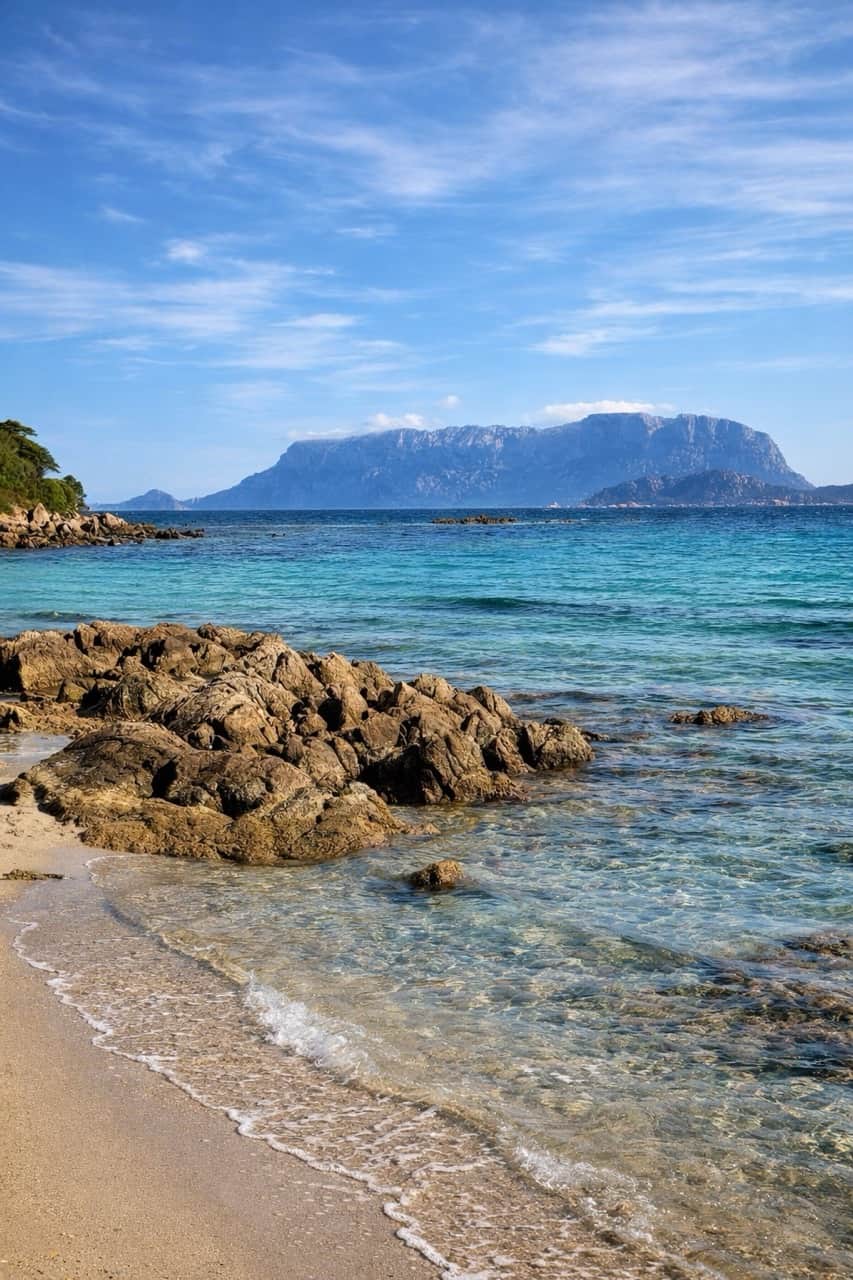
Beach near Olbia with Tavolara island. Tourism sustains 8.5% of Sardinia’s GDP. Foto RENTAL12
Browse Our Collections
Curated apartment groups by style, location, and guest type.
6. The Source Problem: Who Wrote This, Who Benefits, and What Wasn’t Disclosed
Quick answer: The olbia.it article quotes Federalberghi’s vice-president as a neutral expert without disclosing that Federalberghi is a 32,000-member hotel lobby with a documented financial interest in restricting short-term rental competition. The publisher receives regional government subsidies. The author holds no journalism registration. This is not ad hominem — these are material disclosure failures that any editor at any real newspaper would have flagged.
olbia.it is published by Hermaea Lab SRL [25], a micro-company with under €300,000 annual revenue that also operates an online supermarket business. The publisher’s footer discloses receipt of Regione Sardegna editorial subsidies [26] — a funding stream from the same regional government that sets tourism policy. When a subsidized outlet publishes policy analysis on the industry its funder regulates, that conflict should be front and center, not buried in the footer.
Laura Scarpellini holds a degree in interior architecture from Politecnico di Milano and has a career background in the fashion industry. A search of the Ordine dei Giornalisti [24] (Italy’s mandatory press register) public database found no registration under that name. Italian law requires anyone practicing journalism regularly to be registered. This is what happens when interior architecture graduates write about macroeconomics without checking the data: you get an article with assertions where the numbers should be.
Ramona Cherchi is quoted as an expert voice on housing policy. The article identifies her as Vice-President of Federalberghi Gallura but does not disclose that Federalberghi is Italy’s national hotel industry association representing 32,000 hotels that compete directly with short-term rentals [23]. Federalberghi’s president Bernabò Bocca publicly proposed blocking Airbnb’s website in Italy. Its director Alessandro Nucara called Airbnb’s positions “sfacciate e surreali.” Quoting a hotel lobby executive on STR housing policy without disclosing this financial interest is the journalistic equivalent of quoting a tobacco company executive on lung cancer without mentioning they sell cigarettes.
As we documented in our analysis of Italy’s rental law crisis, even Euronews — hardly a pro-Airbnb outlet — acknowledged that the housing problem is structural and regulatory, not caused by short-term rentals. None of this means the housing discussion is unimportant. It means readers deserve to know who is speaking and what they stand to gain. The olbia.it article fails this basic test.
7. The Depopulation Counter-Factual: What Sardinia Looks Like Without Investment
Quick answer: Sardinia lost 9,114 residents in 2024 alone, has Italy’s lowest fertility rate (0.85), and 31 municipalities are projected to disappear entirely. The Ollolai €1-house program sold just 10 homes in 6 years. Restricting private investment in historic centers would accelerate the same demographic collapse the region spends €360 million per year trying to prevent. The article proposes removing the cure while the patient is still in intensive care.
If you want to see what happens to Sardinian towns without private investment, look at the interior. The island lost approximately 100,000 residents between 2016 and 2024 [11]. In 2024 alone, 9,114 people left or died without replacement — a -0.6% decline that is the worst of any Italian region. The fertility rate of 0.85 children per woman is the lowest in Italy and among the lowest in Europe [12].
The counter-factual is not theoretical. Thirty-one Sardinian municipalities are projected to disappear entirely within one generation. The Ollolai €1-house program [27], which generated global media coverage and millions of impressions, sold exactly 10 homes in six years. The Regione Sardegna has spent over €360 million on anti-depopulation programs and an additional €38 million on village tourism incentives [29]. The results have been marginal at best. The OECD framework for regional attractiveness says exactly what the data says: these regions need private capital, not protectionism.
The people renovating old buildings in Olbia’s centro storico are doing exactly what the Regione Sardegna pays consultants to recommend: attracting economic activity to historic town centers, creating year-round employment, and generating fiscal revenue from underutilized assets. The difference is that private investors do it with their own capital and at their own risk, while regional programs do it with taxpayer money and frequently produce no measurable outcome. We documented how STRs drove Sardinia’s season extension from a 2-month spike to a 6-month operation. That is economic development. What Scarpellini describes is economic nostalgia for a centro storico that was literally on fire.
8. The Academic Evidence Scarpellini Didn’t Cite (Because It Contradicts Her Thesis)
Quick answer: FEDEA’s 2026 comprehensive literature review of 23 peer-reviewed studies found positive redistribution effects from short-term rentals. The 15% price rise cited in the olbia.it article is below Italy’s national average of 14–16% over the same period — entirely explained by post-pandemic recovery and construction cost inflation, not STR activity. Scarpellini did not cite a single academic study. Not one.
The olbia.it article cites a 15% property price increase in Olbia as evidence of STR-driven speculation. But Bank of Italy data [8] shows Italian residential property prices rose 14–16% nationally between 2020 and 2025. Olbia’s increase is at or slightly below the national average. There is no “Airbnb effect” to explain because there is no anomaly to explain. This is the kind of fact you find when you actually look at the data, which apparently was not on the agenda.
The price recovery is driven by three macro forces that have nothing to do with vacation rentals:
Post-pandemic recovery. Italian property markets bottomed in 2019-2020 after a decade-long decline from 2008. The 2020-2025 rise is a reversion to pre-crisis levels, not a new bubble.
EU EPBD renovation mandate. The 2024 Energy Performance of Buildings Directive [20] requires renovation to minimum energy standards. This drives construction costs up across all of Europe — not just tourist areas.
Italy’s 4+4 rental law. Law 431/1998 [22] makes long-term renting so risky for landlords (8+ year lock-in, 18-month eviction process) that 9.5 million homes sit vacant nationally. The vacancy is the policy failure, not STRs. The law has five clear reform paths that would unlock housing supply overnight.
FEDEA’s 2026 literature review [7] — which we analyzed in depth — examined 23 peer-reviewed studies on the relationship between short-term rentals and housing markets. The conclusions found positive redistribution effects: STRs direct tourist spending to neighborhoods outside traditional hotel zones, extend seasonal employment, and incentivize renovation of otherwise-abandoned buildings. Harvard/NBER research [6] separately quantified $41/night consumer surplus per guest.
The academic consensus does not support the narrative that short-term rentals cause housing crises. The consensus points to supply-side failures and demand-side distortions as the primary drivers. STRs are a visible, easy target for people who don’t want to read the studies. As we showed in our analysis of quality vs. mass tourism, the question is not whether tourism should exist — the question is whether it creates value or waste. The data on STR-driven renovation of abandoned historic buildings answers that question unambiguously.
Verified Trust & 2,000+ 5 Star Reviews
Certified operator since 2021. IUN F1530 / CIN IT090047B4000F1530.
9. Olbia’s Economic Trajectory: The Numbers Scarpellini Could Have Looked Up
Quick answer: Olbia is the only major growth story in a region that is otherwise depopulating and economically contracting. Its population grew 36% while Sardinia lost 4.3%. Its airport grew 184%. Gallura led all of Italy in business creation in 2024. Attacking the investment model that produced these results is not analysis — it is the opposite of analysis.
The olbia.it article frames Olbia as a victim of tourism. The publicly available economic data tells the opposite story. Below are seven metrics comparing Olbia against Gallura, Sardinia, and Italy from 2000 to the present. Every figure is sourced to ISTAT, ENAC, CCIAA Sassari, Immobiliare.it, or the relevant national authority. No interpretation is added. The numbers speak.
Sardinia: 1,631,880 → 1,561,339. −4.3%.
Italy: 56.99M → 58.97M. +3.5%.
Olbia gained 16,000+ residents in the same period Sardinia lost 70,000. Sardinia’s fertility rate: 0.86 — the lowest in Italy [36].
vs. 2019 pre-COVID: +31.8%. (Cagliari: +8.8%.)
National rank: 14th busiest Italian airport.
Fastest-growing top-20 Italian airport in 2024 (+18.3% YoY). US visitors +246% vs. 2019 [37].
Italy: Growth rate: 0.7%.
Gallura: #1 province in Italy for business growth in 2024 (+2.30%).
12 businesses per 100 inhabitants — among the highest density in Italy. ZES Sardegna attracted €126M in investment [38].
Gallura share: 36.5% of all Sardinian tourism.
Foreign visitor share: ~40% (2000) → 56% (2025).
Tourism generates €3.7B annually for Sardinia. Olbia collected €3.27M in tourist tax in 2024 alone [39].
vs. national average: 72% above.
Building expansion index: 22.4 (Italy: 7.8).
Prices rose because demand from 16,000 new residents met near-zero new supply — not because of 3,128 STR listings [40].
SS729 highway: Completed 2025, €260M+.
SIS International School: Opened 2025.
Plus: university department (2026), submarine fiber cable (2025), Open Fiber FTTH (2020). This is institutional investment, not a tourism monoculture [41].
Hospitality sector: +13.3% YoY.
Sardinia employment rate: 57.7% (rising).
Youth unemployment remains ~25%, a structural Mezzogiorno problem that predates tourism by decades [42].
One institutional caveat, for completeness: OECD and SVIMEZ reports note that Sardinia’s tourism benefits are geographically concentrated along the coast. Inland municipalities are not experiencing the same growth. That is a legitimate policy concern — and it has nothing whatsoever to do with short-term rentals. It is a regional development question about infrastructure and connectivity, not a housing question about Airbnb listings.
Olbia is the only city in Sardinia where population, employment, airport traffic, business creation, and property values are all growing simultaneously. It is the single strongest economic performance in the Mezzogiorno outside of a handful of Pugliese cities. Framing this as a crisis caused by vacation rentals is not a difference of opinion. It is a failure to check publicly available data before publishing.
Source Registry
Every factual claim in this article is traceable to a numbered source below. All URLs accessed 21 May 2026 unless otherwise noted. The article we are responding to provides zero numbered sources. We provide 45.
[1] ISTAT — Censimento Permanente della Popolazione 2021: Olbia housing stock (41,370 units, 10,777 empty). esploradati.istat.it
[2] AirDNA — Olbia short-term rental market data 2026 (3,128 active listings). airdna.co
[3] ANCE — Osservatorio Congiunturale: renovation costs Sardinia €1,800–2,500/sqm (2025). ance.it
[4] Immobiliare.it — Olbia centro storico historical price trends 2020-2026 (€1,150–1,500/sqm 2020, €3,000/sqm 2026). immobiliare.it
[5] Oxford Economics — Economic contribution of short-term rentals in the EU: €149B impact, 2.1M jobs (2024). news.airbnb.com (PDF)
[6] Harvard/NBER — Farronato & Fradkin: consumer surplus from peer-to-peer accommodation, $41/night (2022). nber.org
[7] FEDEA — Literature review: effects of short-term rentals on housing markets, 23 peer-reviewed studies (2026). fedea.net
[8] Bank of Italy — Italian residential property price index 2020-2025: national average +14–16%. bancaditalia.it
[9] Comune di Olbia — Tourist tax revenue 2024: €3.27M (+21.3%). comune.olbia.ot.it
[10] GEASAR — Olbia Costa Smeralda Airport 2024 passenger statistics: 3.85M (+18.3%). geasar.it
[11] ISTAT — Sardinia depopulation: -9,114 residents 2024, -0.6% (worst Italian region). demo.istat.it
[12] ISTAT — Sardinia fertility rate 2024: 0.85 children per woman (lowest in Italy). demo.istat.it
[13] Regione Sardegna — PNRR/PINQUA application for Olbia centro storico: €19M, citing “social marginalization and degradation.” regione.sardegna.it
[14] La Nuova Sardegna — Ongoing degradation in Olbia centro storico (January 2025). lanuovasardegna.it
[15] olbia.it — Cinema Astra arson fires documentation (2002, 2005, 2006). olbia.it
[16] olbia.it — Via Cavour 33 “casa-discarica” report. olbia.it
[17] Airbnb — 44M arrivals in areas with no hotel infrastructure (2024 Economic Impact Report). news.airbnb.com
[18] Sardegna Statistiche — 21.8M visitor stays in 2025 (record). sardegnastatistiche.it
[19] Sardegna Turismo — Foreign tourist spending Jan-Sep 2025: €2B (+25% YoY). sardegnaturismo.it
[20] EU Energy Performance of Buildings Directive (EPBD) 2024 recast — renovation cost driver. energy.ec.europa.eu
[21] Italy NTC 2018 — Norme Tecniche per le Costruzioni (seismic building code). gazzettaufficiale.it
[22] Italy Law 431/1998 — 4+4 residential rental contract framework (9.5M vacancies nationally). gazzettaufficiale.it
[23] Federalberghi — Annual report and lobbying positions 2024-2025 (32,000 hotel members). federalberghi.it
[24] Ordine dei Giornalisti — Public register search for author credentials. odg.it
[25] Camera di Commercio — Hermaea Lab SRL company data (Registro Imprese). registroimprese.it
[26] Regione Sardegna — Press subsidies and editorial contributions 2024-2025. regione.sardegna.it
[27] Comune di Ollolai — €1 house program municipal reports 2018-2024 (10 homes sold). comune.ollolai.nu.it
[28] Comune di Olbia / Mayor Nizzi — January 2026 statement on housing construction needs. Municipal press conference.
[29] Regione Sardegna — Anti-depopulation spending (€360M+) and village tourism incentives (€38M). Budget reports 2020-2025. regione.sardegna.it
[30] ISTAT — Sardinia vacant housing stock: 312,423 units, 30.2% of total (Censimento 2021 regional data). esploradati.istat.it
[31] olbia.it — “Il paradosso della Gallura: tra voli diretti da New York e il nodo degli affitti brevi” (Scarpellini, 20 May 2026). olbia.it
[32] RENTAL12 — The Short-Term Rental Housing Myth: What 23 Studies Actually Show. rental12.com
[33] RENTAL12 — Italy’s Rental Law Is the Housing Crisis — Not Airbnb. rental12.com
[34] RENTAL12 — The STR Economy: What the Numbers Actually Show (EU impact: €149B, 2.1M jobs). rental12.com
[35] RENTAL12 — Olbia Airport Record Routes Summer 2026 (Delta JFK direct service). rental12.com
[36] ISTAT — Popolazione residente comunale 2001–2025: Olbia 45,366 → 61,658 (+36%); Sardinia 1,631,880 → 1,561,339 (−4.3%). Fertility rate Sardinia 0.86 (lowest in Italy). demo.istat.it
[37] ENAC / Geasar — Olbia Costa Smeralda airport traffic: 1.37M pax (2002) → 3.88M (2024), +184%. YoY 2024: +18.3%. vs. 2019: +31.8%. US visitors +246% vs. 2019. enac.gov.it
[38] CCIAA Sassari / Unioncamere — Olbia active businesses 7,892 (2024), growth rate 3.1% vs. Italy 0.7%. Gallura #1 in Italy for business growth 2024 (+2.30%). ZES Sardegna: €126M invested. ss.camcom.it
[39] ISTAT / Regione Sardegna — Sardinia tourism presenze: ~11M (2000) → 21.8M (2025). Gallura: 36.5% of regional total. Foreign share 56%. Annual tourism revenue: €3.7B. Olbia tourist tax 2024: €3.27M. regione.sardegna.it
[40] Immobiliare.it / OMI — Olbia avg. asking price €3,756/sqm (March 2026), +17% in 3 years, 72% above national average. Building expansion index: Olbia 22.4, Italy 7.8. immobiliare.it
[41] Mater Olbia Hospital (Qatar Foundation), ANAS SS729 completion report 2025, SIS International School Olbia (opened 2025), UniSS Olbia campus expansion 2026, Open Fiber FTTH Olbia (2020), Sparkle submarine cable (2025). Various institutional sources.
[42] INPS / ISTAT Forze Lavoro — Gallura employees: 134,414 (record). Hospitality sector +13.3%. Sardinia employment rate: 57.7%. Youth unemployment ~25% (structural Mezzogiorno baseline). istat.it
[43] AirROI — Active STR listings Olbia: 2,083 (currently active, vs. AirDNA trailing-12-month 3,128). Sociometrica / Il Sole 24 Ore — 2,958 registered private tourism structures, Olbia province. airroi.com
[44] Comune di Olbia B&B registry; Alghero proxy data (ISTAT/Regione Sardegna) — 87.3% entire-home listings, 12.7% private/shared rooms (owner resident). B&B average ~3 rooms per structure. comune.olbia.ot.it
[45] AIGAB Centro Studi — “Sardegna, dati inediti su affitti brevi: non sottraggono case ai residenti, solo il 3,5% delle abitazioni è destinato al comparto.” Presented at EXTRA2026, Cagliari, 11 April 2026. Sardinia: 1,049,263 total homes, 319,211 unoccupied (30.4%), 37,094 STR (3.5%). Property origin: inherited 30.4%, long-vacant 26.1%, owner-occupied 28.7%, investment 12.6%, converted from LT rental 2.2%. ansa.it (AIGAB survey coverage)
37 Renovated Apartments, Zero Abandoned Buildings
Owner-operated since 2021. 4.9★ from 2,000+ 5 star reviews across five platforms.
Frequently Asked Questions
Conclusion: The Data Is In. Olbia Earned This.
Twenty-five years ago, Olbia was a transit point. Tourists landed at Costa Smeralda Airport, drove to Porto Cervo, and left. The city itself was a departure lounge with a ferry port. The centro storico had abandoned buildings, shuttered shops, and a population that was leaving.
Today, Olbia is an economic hub. Its population grew 36% while Sardinia’s shrank 4.3%. Its airport traffic grew 184% and now handles 3.88 million passengers a year — 14th in Italy. Its business creation rate (3.1%) is more than four times the national average (0.7%). Gallura ranked first in all of Italy for new business growth in 2024. The city has a private hospital, an international school, a university campus, fiber-optic broadband, and a highway that finally connects it to the rest of the island. Delta Air Lines is launching direct service from New York JFK — a transatlantic carrier does not invest in a city that is failing.
Olbia did not become this by accident. It became this because private investors — including short-term rental operators — poured capital into renovating abandoned buildings that no one else would touch. Renovation costs of €1,800–2,500 per square metre against sale prices of €3,000 per square metre mean these investments are not speculative windfalls. They are long-term commitments to a city that rewards effort with occupancy. The result: a winter season, a shoulder season, a high season, and year-round economic activity in a region where most cities have none.
Out of 377 municipalities in Sardinia, Olbia outperforms more than 95% on population growth, employment, airport traffic, business density, and property value appreciation. Out of approximately 4,600 municipalities in southern Italy (the Mezzogiorno), Olbia sits in the top 1% by virtually every economic metric that matters. Thirty-one Sardinian municipalities face demographic extinction. Olbia gained 16,000 residents.
The olbia.it article looked at this record and concluded the problem was Airbnb. It cited no ISTAT census data. It cited no airport traffic statistics. It cited no business creation numbers. It cited no employment records. It quoted a hotel lobby vice-president as a neutral expert without disclosing the financial conflict. It published one day after the Delta announcement, using the biggest aviation news in Sardinia’s recent history as a hook for a pre-written anti-tourism narrative. 45 sources in this article. Zero in theirs.
Olbia transformed itself from a transit corridor into the strongest-growing city in Sardinia and one of the strongest in southern Italy. The data is public. The trajectory is undeniable. The future is bright. Bravo, Olbia.
Privacy Policy