Wine Tasting in North Sardinia: Vermentino, Gallura & the Wineries Near Olbia
Sardinia's only DOCG is northern. This is our local, owner-operator guide to tasting Vermentino di Gallura and the granite-and-sea-wind wineries you can actually reach from Olbia, Golfo Aranci and the Gallura coast — verified profiles, honest booking advice and itineraries that keep you north, where the best whites are made.

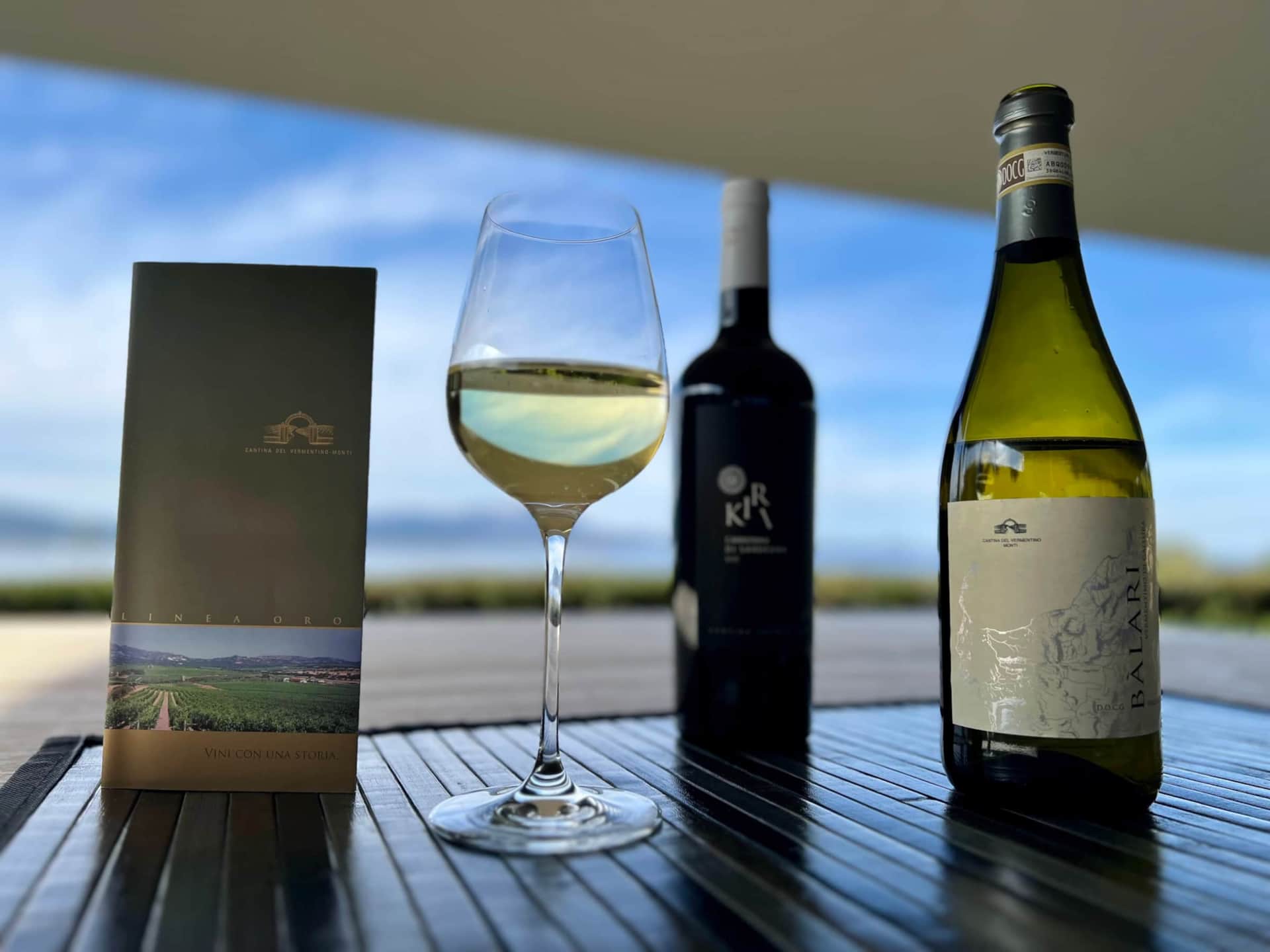
Vermentino di Gallura DOCG — Sardinia's only DOCG, made in the north. Photo RENTAL12.
Quick guide
North Sardinia is Vermentino country. Vermentino di Gallura has been Sardinia's first and only DOCG since 1996, grown on granite hills cooled by the Mistral wind. The closest serious winery to Olbia is Tenute Olbios (10–15 min); Vigne Surrau and Capichera sit near Arzachena (about 30 min); inland Gallura adds Siddura and Cantina Gallura; and the Alghero northwest brings Sella & Mosca, the underwater-aged Akenta and the revived red Cagnulari. Book ahead, keep it to two wineries a day, and base yourself in Olbia for the easiest reach.
Live tools for your wine trip
Real-time helpers that update daily with Sardinia conditions.
Base yourself where the vineyards and the sea meet
Stay in Olbia, Golfo Aranci or the Gallura coast and you are 10–45 minutes from the best DOCG wineries — and minutes from the beach.
Why North Sardinian wine is worth your time
Quick answer: North Sardinia makes the island's most distinctive whites. Vermentino di Gallura — Sardinia's first and only DOCG, since 1996 — grows on granite hills swept by the Mistral, giving citrus, salinity and a bitter-almond finish you rarely taste elsewhere. Small family estates sit beside historic houses, all within an easy drive of an Olbia base.
Gallura, the north-eastern corner around Olbia, Arzachena and Tempio Pausania, is one of Italy's most singular white-wine landscapes. Poor granite soils stress the vines and concentrate the fruit; constant sea ventilation keeps the grapes healthy and the wines fresh. The result is a Vermentino with real minerality and tension — built for the seafood you'll be eating a few hundred metres from the boat that landed it.
What makes tasting here feel different is the scale. You can still meet owners, walk between the vines, and drink wines that carry the character of a specific valley rather than a global house style. Many of the most interesting Gallura bottlings never leave the island — so the only place to try them is here, on a granite terrace with the sea in the distance.
The wine regions of North Sardinia
Quick answer: Two zones matter up north. Gallura — the granite heartland of Vermentino di Gallura DOCG around Olbia, Arzachena, Tempio and Luogosanto — is your everyday tasting territory. The Alghero–Sassari northwest (Alghero DOC, Romangia, Usini) adds Torbato, the underwater Akenta and the native red Cagnulari, but it's a full-day trip from Olbia.
Gallura: granite, sea wind & Vermentino di Gallura DOCG
The DOCG zone covers the historic Gallura territory — Olbia, Arzachena, Tempio Pausania, Luogosanto, Monti, Berchidda, Golfo Aranci and more. Two broad sub-styles: the mountainous interior (pink granite and clay around Tempio and Luogosanto) and the coastal zone (granite and sand around Arzachena) with its bigger day-to-night temperature swing. The minimum is 95% Vermentino, and styles run from fresh base wines to the richer Superiore, plus sparkling, late-harvest and Passito.
The northwest: Alghero, Romangia & Usini
Around Alghero, large historic houses make Vermentino, Cannonau, Cagnulari, Torbato and sparkling wines under Alghero DOC. Torbato is a near-exclusive northwest specialty tied to Sella & Mosca; Cagnulari is the offbeat native red revived around Usini; and the Romangia hills above Sorso–Sennori are natural-wine country, led by Tenute Dettori. Wonderful — but plan it as a full day or an overnight from Olbia.
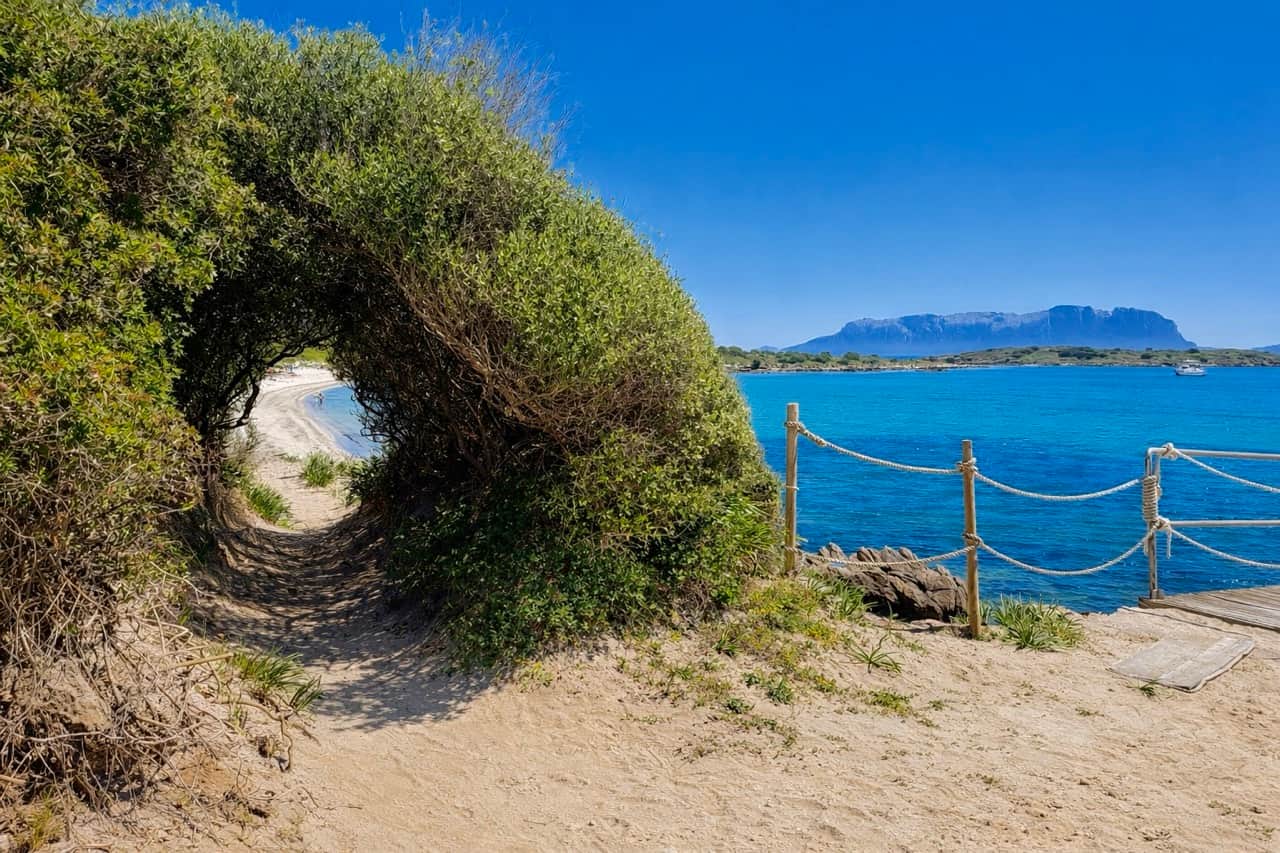
Granite, sea and wind — the Gallura coast that shapes the wine. Pittulongu, with Tavolara beyond. Photo RENTAL12.
The grapes & styles you'll taste up north
Quick answer: Learn five names and you can read any northern wine list: Vermentino di Gallura (the star white), Vermentino di Sardegna (its softer everyday cousin), Torbato (aromatic Alghero white), Cannonau (Sardinia's Grenache red) and Cagnulari (the revived Usini red). Add Moscato di Gallura for dessert wines.
The headline acts: the only DOCG in Sardinia is northern; Akenta Sub is aged underwater off Capo Caccia; Capichera put Sardinian Vermentino on the world map from 1981; and Cagnulari was brought back from near-extinction at Usini.
The best wineries to visit in North Sardinia
Quick answer: Start near Olbia with Tenute Olbios (10–15 min), then build a day around Arzachena's Vigne Surrau and Capichera (about 30 min). Inland Gallura adds award-winning Siddura at Luogosanto and historic Cantina Gallura at Tempio. Save the Alghero northwest — Sella & Mosca, Santa Maria La Palma, Cherchi, Dettori — for a full day. Drive times below are approximate; always confirm hours and book ahead on each winery's official site.
Near Olbia — 10–30 minutes
Tenute Olbios — Olbia
Owner Daniela Pinna's vegan, sustainability-focused estate faces Tavolara to the east and the Castle of Pedres to the west. The visit is intimate and often private-feeling: a tour plus a guided tasting of four Vermentino styles with a sommelier, served with cheeses by maturation, fruit, wine jellies and Sardinian bread — and an underground granite-vaulted cellar over a natural aquifer. Booking required.
La Contralta & Cantina Pedres — Olbia
La Contralta (Enas, a few km from town) pours estate wines Monday–Friday on hills over the Gulf of Olbia — pair it with the nearby Castle of Pedres and the Tomb of the Giants Su Mont'e S'Abe. Cantina Pedres, in Olbia itself, offers a broad, accessible range including Vermentino, Cannonau, Colli del Limbara and sparkling Vermentino Brut and Brut Rosé — handy if you're short on time.
Around Arzachena & the Costa Smeralda — about 30 minutes
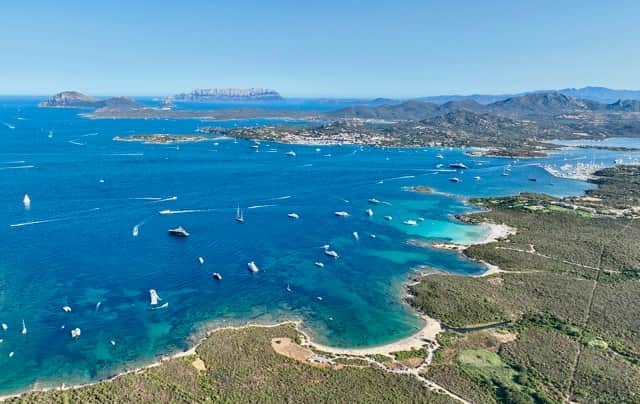
Wine and sea: the Costa Smeralda coast near Arzachena's wineries. Photo RENTAL12.
Vigne Surrau — Arzachena
A striking glass-and-stone winery in the Surrau valley with one of the north's most beautiful tasting spaces — gallery, terrace and restaurant. More than 50 hectares (around 35 of Vermentino) behind signature labels Branu (fresh, mineral), Sciala (Vermentino di Gallura Superiore) and Sincaru (Cannonau). Open daily from 10:00; tour slots are limited and language-specific, so call ahead and book the structured flight to guarantee the full range.
Capichera — Arzachena
The Ragnedda family estate credited with the modern rebirth of Vermentino — the first "Capichera" bottling in 1981 elevated the grape to international-white status, and the wines are built to age 20–25 years. Visits are by appointment, on small terraces among the vines, myrtle and oak, typically May–October, from short tastings up to multi-hour premium formats with older vintages and food pairings. Minutes from Costa Smeralda beaches.
Heading inland from Arzachena? Cantina Tondini at Calangianus is a smaller, serious, low-yield Vermentino specialist worth the detour.
Inland Gallura: Luogosanto, Tempio, Monti, Berchidda
Siddura — Luogosanto
One of Sardinia's most awarded estates — named Cellar of the Year by Vinitaly's 5StarWines in 2021 — in a scenic valley near medieval Luogosanto at 200–300 m. A restored stazzo with contemporary art, certified sustainable, making Vermentino di Gallura (flagship Maìa), Cannonau, rosé, sparkling and dessert Moscato. A guided vineyard tour plus a tasting of around six labels; request the visit via the winery website.
Cantina Gallura & Monti
Cantina Gallura at Tempio Pausania has worked since 1956 at the foot of Monte Limbara — a benchmark co-op for traditional Gallura whites, and a fine pairing with Tempio's all-granite old town. Nearby Monti is the village built on Vermentino, ideal for a tasting plus an agriturismo lunch. Further out, Berchidda (Cantina Giogantinu) adds a wine-and-culture angle around the August Time in Jazz festival.
Cantina del Vermentino & lunch at Stella — Monti
The bottle of Ballari waiting in your RENTAL12 welcome gift comes from Cantina del Vermentino di Monti, the historic Gallura co-operative in the village built on Vermentino, about 30–35 minutes inland from Olbia. It's an easy, friendly tasting stop — and the perfect excuse to drive out to Monti. Pair it with lunch or dinner at our long-standing favourite, the family-run Trattoria Stella: handmade culurgiones, slow-roasted porceddu and seadas, deep in DOCG country.
Read our guide to Trattoria Stella in Monti · montistella.com
The Alghero & Sassari northwest — a full day (about 2.5 hrs each way)
Sella & Mosca — Alghero
The largest and one of the oldest producers on the island, part of the Terra Moretti group, famous for Torbato (including a Torbato Brut sparkling) alongside Vermentino, Cannonau and Cabernet. A historic estate with gardens, a wine museum, shop and boutique hotel. Tiered cellar tours run daily by reservation in English or Italian — email ahead, ideally a week or more in peak season.
Cantina Santa Maria La Palma — Alghero
A large cooperative of around 300 grower-members behind the celebrated Akenta sparkling line — including Akenta Sub, a Vermentino aged six to ten months around 40 metres underwater off Capo Caccia. Tiered tours of about 90 minutes with cheese and charcuterie; open Monday–Saturday, closed Sunday; reserve via the website. There's also a wine shop in Alghero town near the harbour.
Vinicola Cherchi — Usini
On the limestone hills west of Sassari, the Cherchi family has worked since 1970 — Giovanni "Billia" Cherchi is credited with bringing the near-extinct Cagnulari grape back from the brink. Estate-grown Cagnulari, single-vineyard Vermentino (Tuvaoes) and Cannonau, with a Mistral-driven minerality. Niche, but the place to taste Cagnulari at source.
Tenute Dettori — Sennori (Romangia)
A family of shepherd-farmers making wine for generations, bottling since 1981 in the Badde Nigolosu cru above Sennori — biodynamic, naturally fermented, unfiltered, with minimal-to-no added sulphites. Powerful, terroir-extreme Cannonau and the macerated Dettori Bianco Vermentino, with the on-site Kent'Annos agriturismo for a long lunch. For the curious drinker — an experience as much as a tasting.
How to taste: wineries, wine bars & tours
Quick answer: Three ways to taste up north: book a winery tour-and-tasting (the richest experience, almost always by reservation); graze the wine bars of Olbia's Corso Umberto and Golfo Aranci for a low-commitment flight; or hire a private driver so nobody has to skip a glass. RENTAL12's vetted local partners cover drivers, wine bistros and in-apartment chefs.
For a single memorable visit, a guided winery tasting wins — you'll walk the cellar, meet the team and taste a curated flight with local food. Almost all northern estates prefer or require booking, and the best ones (Capichera, Siddura, Dettori) are appointment-only. If you'd rather keep it loose, the wine bars and aperitivo spots of Olbia and Golfo Aranci pour excellent Vermentino by the glass, and our restaurant list flags the cellars worth ordering from.
For any multi-winery day, plan a designated driver or a private transfer — distances look short on the map, but granite back-roads wind. Our trusted local partners include private drivers, wine bistros and a Chef On Demand who can build a Vermentino-and-Cannonau pairing dinner in your apartment.
Sample wine itineraries from Olbia & Golfo Aranci
Quick answer: Keep it to two wineries a day — granite roads are slow and tastings are generous. A half day is one winery plus lunch; a full Costa Smeralda day pairs Surrau and Capichera with a swim; an inland day links Siddura, Tempio and Monti; and a wine-and-beach week mixes Gallura whites, one inland day and an Alghero overnight.
Half day from Olbia (easy)
Morning at Tenute Olbios for the four-Vermentino sommelier tasting, then lunch on Corso Umberto or at the winery bistrot. Keep the afternoon for Pittulongu or a nearby beach or a siesta. One winery plus lunch is plenty.
Full day — Costa Smeralda wine & sea
Late-morning tasting at Vigne Surrau, lunch in San Pantaleo, then a by-appointment stop at Capichera or a swim at Capriccioli. Return to Golfo Aranci for a sunset aperitivo. Two wineries max.
Full day — inland granite heart
Siddura at Luogosanto (request via website), an agriturismo lunch, then Cantina Gallura or a Tempio Pausania stroll, with an optional Monti Vermentino stop on the way back. See more day trips from Olbia.
One wine-and-beach week
Two or three days of Gallura whites and coast, one inland day, one long day or overnight to the Alghero northwest, and one or two days free for boats, markets and long lunches. Combine it with a boat day off Tavolara.
Seasonal note. Harvest runs late August through September and October — fascinating but busy, so book and respect cellar schedules. Spring (April–May) and autumn are the calmest, greenest seasons with the most generous tastings. Summer needs reservations and morning or late-afternoon timing to dodge the midday heat. Events worth catching: Benvenuto Vermentino (Olbia, autumn), Calici di Stelle (Tempio, around 10 August), the San Leonardo Vermentino festival, and Time in Jazz at Berchidda.
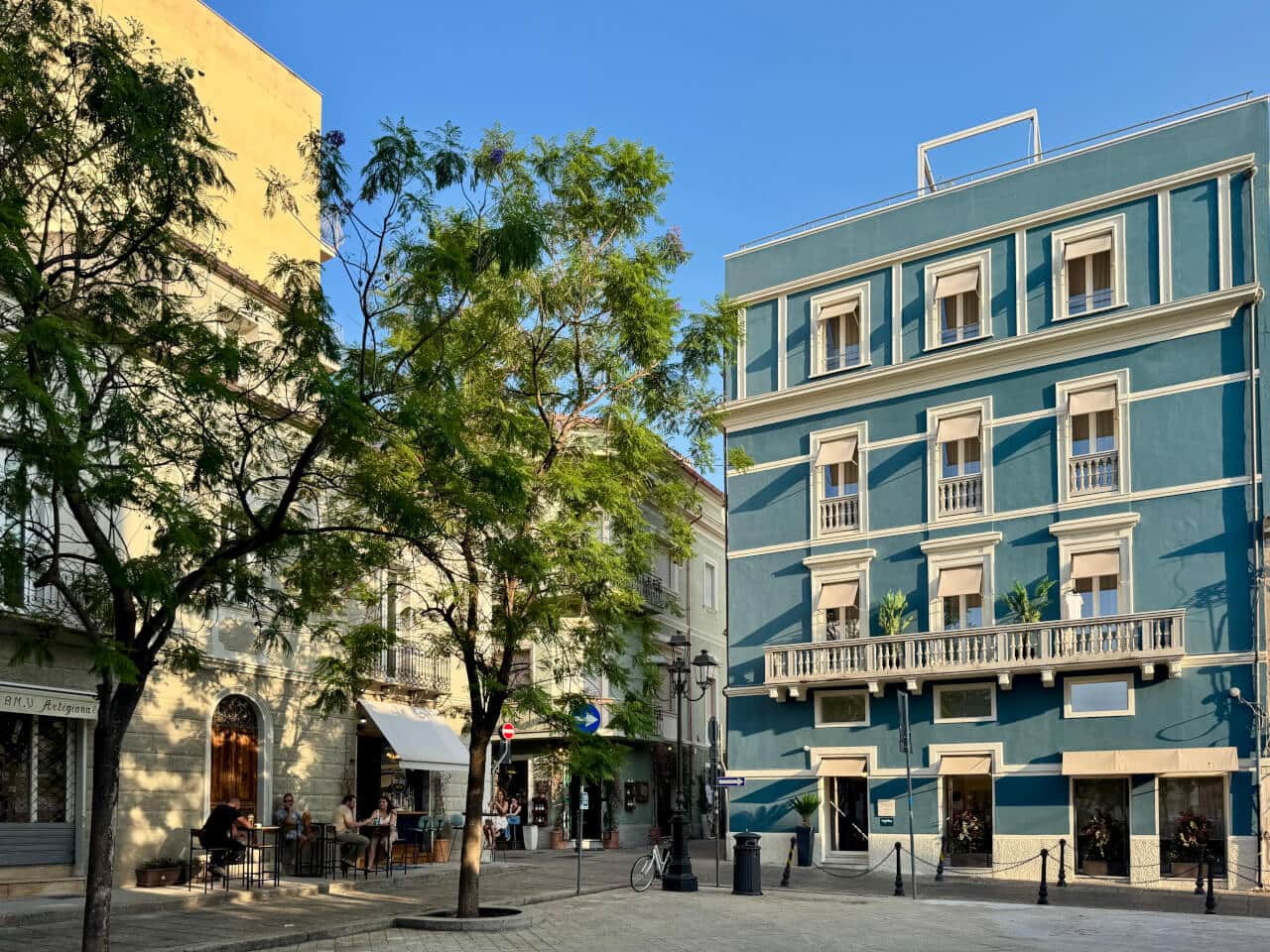
Base yourself in Olbia's historic centre — wineries out, wine bars and dinner in. Photo RENTAL12.
Food pairing: what to drink with what
Quick answer: Drink Vermentino di Gallura with raw seafood, fregola with clams and bottarga, and grilled fish — its salinity mirrors the sea. Pour Cannonau with porceddu and mature pecorino, sparkling Torbato or Akenta as aperitivo, Cagnulari with grilled meats, and Moscato with seadas.
Want the full table? Our Sardinian food guide covers the dishes, and the family-run Trattoria Stella in Monti — deep in Vermentino country — is our pick for a tasting-day lunch. On the red side, Cannonau is also at the heart of our Sardinia Blue Zone guide, where its polyphenols feature in the island's longevity story.
Driving, booking & practical tips
Quick answer: A car is effectively required for Gallura wineries; public transport inland is thin. Always reserve in summer and at harvest, and remember several estates are appointment-only year-round. Plan a designated driver for any multi-winery day, and ask for an English slot when booking the larger houses.
Getting there
A hire car makes Gallura easy — though you may only need one for part of your stay. See getting around Olbia for the full picture.
Parking & the ZTL
Driving back into Olbia's historic centre after a tasting? Park at Via Sassari 20 and check the Olbia parking and ZTL rules first — our parking guide has the details.
Booking & language
Reserve ahead in summer; Capichera, Siddura and Dettori are appointment-only. Sella & Mosca and Surrau schedule by language — ask for an English slot. Confirm hours and prices on each winery's official site; treat any price as "at the time of writing."
Approx. drive times from Olbia
Tenute Olbios ~10–15 min · Cantina Pedres ~10 min · Vigne Surrau ~25–30 min · Capichera ~30 min · Monti ~30–35 min · Siddura ~45 min · Tempio ~50 min · Alghero cluster ~2.5 hrs.
Buying & bringing wine home
Quick answer: Some larger labels — Sella & Mosca, Surrau, Capichera — reach export markets, but many small Gallura bottlings stay on the island. Buy what you love at the winery before you fly, ask the shop to pack it for hold luggage, and keep bottles out of a hot car between stops.
Most estates run a shop on site, and several (like Santa Maria La Palma) bundle a discount with the tasting. If you're flying, wine travels best boxed and checked — the winery can usually wrap bottles for transport. For collectors, the age-worthy wines to look for are Capichera's Vermentino and Dettori's Cannonau; for everyday drinking, a case of Branu or a La Cala Vermentino keeps the holiday going at home.
Frequently asked questions
Where are the best wineries near Olbia?
Which wineries are closest to Olbia and worth visiting?
The closest serious producer is Tenute Olbios (about 10-15 minutes, a Vermentino di Gallura specialist); within about 30 minutes you reach Vigne Surrau and Capichera near Arzachena, and inland Gallura adds Siddura at Luogosanto (about 45 minutes) and Cantina Gallura at Tempio Pausania.
For a first afternoon, Tenute Olbios is the easiest serious DOCG visit from an Olbia apartment. Give a full day to the Arzachena pair, Surrau and Capichera, and treat inland Gallura (Siddura, Cantina Gallura, Monti) as a second, slower day.
What wine is North Sardinia famous for?
What is the signature wine of North Sardinia?
Vermentino di Gallura, Sardinia's only DOCG since 1996, a crisp mineral sea-scented white grown on Gallura's granite hills; the northwest around Alghero adds Torbato and the underwater-aged Akenta sparkling, while Usini is known for the revived red Cagnulari.
Vermentino is the north's calling card, but the region rewards curiosity: try a Superiore for more structure, an Akenta for a story, and a Cagnulari to taste a grape that almost disappeared.
Do I need to book winery visits?
Are winery visits in North Sardinia by reservation?
Yes, especially in summer and at harvest; several northern estates are appointment-only year-round, including Capichera, Siddura and Tenute Dettori, while larger houses such as Sella & Mosca and Santa Maria La Palma run scheduled tours by reservation in set English or Italian slots.
Walk-ins are risky. Book a few days ahead in peak season, and a week or more for the big Alghero houses. Booking the structured flight also guarantees the full range is open.
Can I visit wineries without a car?
Is it possible to taste wine in Gallura without driving?
A car makes Gallura far easier because inland public transport is limited; otherwise join a small-group tour or hire a private driver for the day, and many guests rent a car for only part of their stay.
For a tasting-heavy day, a private driver is the relaxed choice — nobody has to spit and everyone enjoys the granite-road scenery. Our local partners can arrange one.
When is the best time for wine tasting in the north?
What is the best season to visit North Sardinia's wineries?
Spring from April to May and autumn are ideal, mild, green and quiet with wineries that have more time for you; summer works with reservations and morning or late-afternoon timing, and harvest from late August to October is fascinating but busy.
If you can choose, late spring and September are the sweet spot: warm enough for the beach, calm enough that owners linger over the tasting.
What's the underwater wine I keep hearing about?
What is the underwater-aged sparkling wine from Sardinia?
Akenta Sub from Cantina Santa Maria La Palma near Alghero is a sparkling Vermentino aged six to ten months around 40 metres underwater off Capo Caccia, and you can taste it on their winery tour.
It's a genuine experience as much as a wine — the pressure and constant temperature of the seabed are said to shape the bubble. A fun finish to an Alghero day.
Which winery is best for a special, bucket-list visit?
Which North Sardinia winery is best for a once-in-a-trip visit?
Capichera at Arzachena for prestige Vermentino and age-worthy wines tasted on terraces among the vines, Vigne Surrau for the most striking architecture and tasting terrace, and Siddura for an award-winning art-filled estate near Luogosanto.
If you only do one, make it Capichera for the wine and the setting — then cool off at a Costa Smeralda beach minutes away.
How far is the Alghero wine area from Olbia?
How long is the drive from Olbia to the Alghero wineries?
Roughly 2.5 hours each way, so it is better as a full day with an early start or an overnight, ideally combined with Alghero's old town; the Gallura wineries near Olbia are the practical choice for an afternoon.
If the Alghero northwest is a priority, stay a night near Alghero so you can fit Sella & Mosca, Santa Maria La Palma and a Usini or Sennori stop without rushing.
Stay where the Vermentino is made
37 owner-operated apartments and villas in Olbia and Golfo Aranci, rated 4.9★ from 2,000+ 5 star reviews. Wineries out, sea and dinner in.
IUN F1530 / CIN IT090047B4000F1530 · Privacy