Is Sardinia Safe? A 2026 Travel Guide
Practical safety guidance for visiting Sardinia — verified by hosts who live in Olbia year-round, updated monthly.
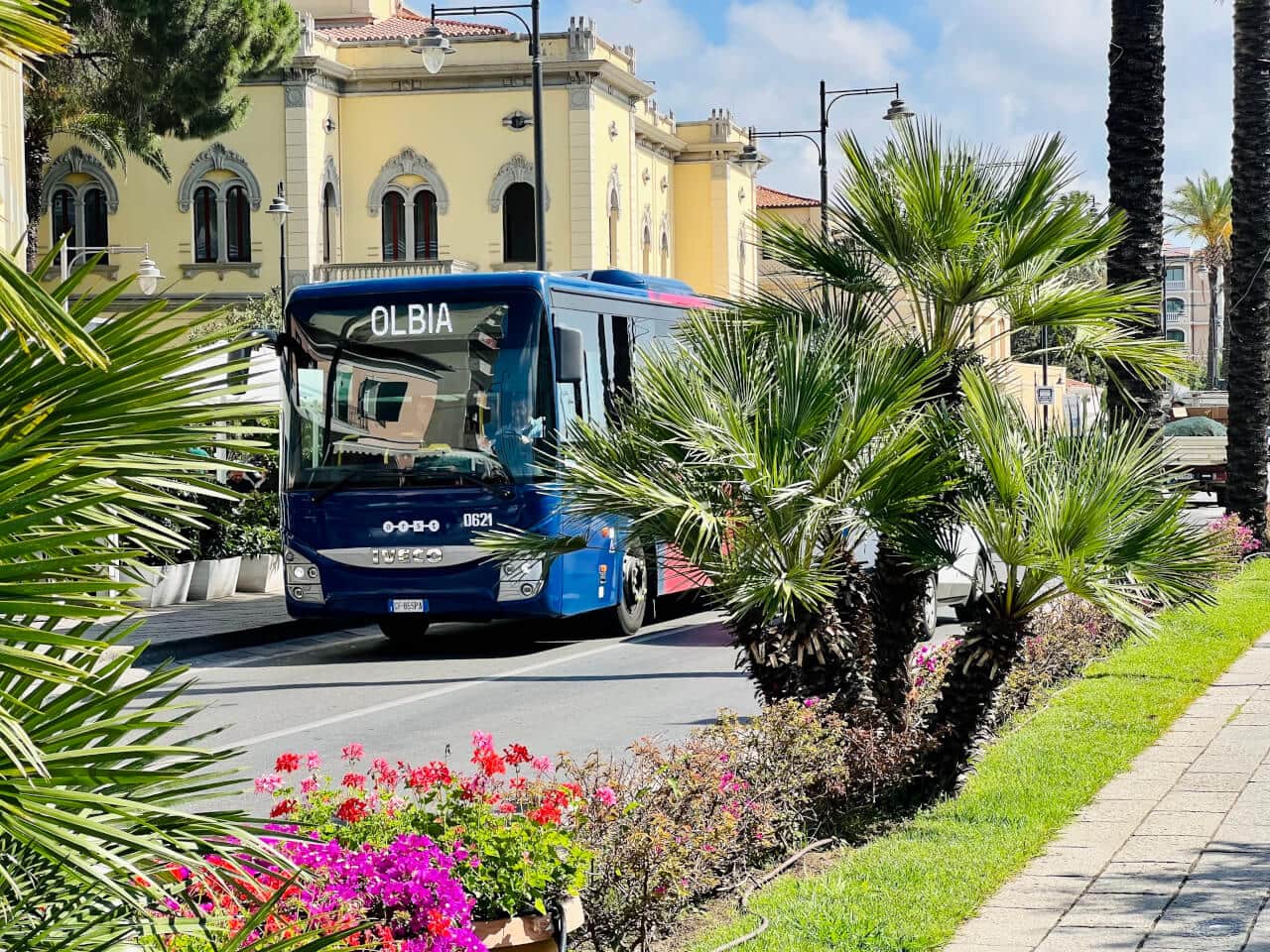
Daylight on Corso Umberto, Olbia's main pedestrian passeggiata — Photo RENTAL12
Quick Guide
Sardinia is Italy's safest region (1,572 crimes per 100,000 in Oristano vs 6,952 in Milan, ISTAT 2024). Violent crime is rare, especially outside summer tourist crowds. Daylight in Olbia old town, beaches, and restaurants is safe at all hours. Standard precautions apply at night around Cala Gonone clubs, summer ferry queues, and isolated mountain hiking. Family-friendly. Solo-traveler-friendly. Emergency: 112 (all services).

Live tools for your Olbia stay
Real-time helpers that update every day with Sardinia conditions.
On this page
- Is Sardinia safer than mainland Italy?
- Is Olbia safe at night?
- Is Sardinia safe for solo female travelers?
- Is Sardinia safe for families with children?
- What scams should travelers watch for?
- Pickpockets, ferry queues, summer crowds
- Are Sardinian beaches safe to swim?
- Emergency numbers in Sardinia
- Are there areas to avoid in Sardinia?
- RENTAL12's safety record
- Frequently asked questions
Staying in town keeps every safety advantage on your side — our owner-operated holiday rentals in Olbia sit in the walkable centre, with 24/7 support from the team that lives here.
Is Sardinia safer than mainland Italy?
Quick answer: Yes — measurably so. Oristano (central-west Sardinia) is Italy's safest province with 1,572 crimes reported per 100,000 residents in 2024, vs Milan at 6,952 (ISTAT 2024). All four Sardinian provinces sit in the lower half of Italy's safety ranking, and the island as a whole records 60% fewer violent crimes than the national average.
Why the gap? Sardinia is rural, low-density (69 people per square kilometre versus 196 nationwide), and outside the major mainland trafficking corridors. The classic threats travelers worry about in Rome, Naples or Milan — organised pickpocket teams, ATM-skimming rings, aggressive panhandling — exist at much smaller scale here, and largely cluster around the Olbia ferry port during peak summer boarding windows. Outside of that one specific context, the day-to-day environment is closer to rural Switzerland than to urban Italy.
For the underlying ISTAT data and how it compares with the Canadian and US travel advisories that still treat "Italy" as one risk zone, see our analysis of the Canada advisory.
Is Olbia safe at night?
Quick answer: Yes. The historic centre — Corso Umberto, Piazza Margherita, Piazza Matteotti — fills with locals walking the evening passeggiata until well after midnight in summer. Late-night noise concerns are limited to the Aldo Moro nightclub district and the Pittulongu summer beach-club strip, where standard nightlife precautions apply.
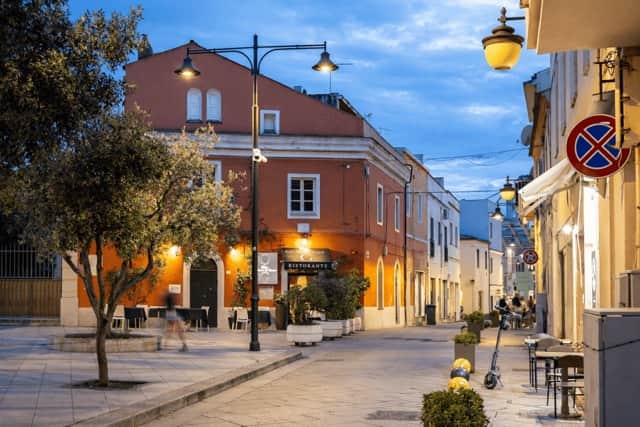
Olbia city centre by night near Officina del Gusto restaurant · Photo RENTAL12
The reason Olbia old town feels so safe at night isn't policing — it's the passeggiata. From around 19:00 in summer (slightly earlier off-season), Corso Umberto becomes a single mass of people walking, talking, eating gelato, taking photos. Restaurants stay open until 23:00–midnight. Children run between tables. Women walk home alone. That density of normal life is what makes the streets feel safe, not police presence.
Two specific contexts where standard precautions matter: (1) the Aldo Moro nightclub belt, where weekend exits at 03:00–04:00 can include altercations between groups (rare, but happens — same as anywhere in Europe); and (2) the Pittulongu summer-beach-club strip, where the combination of alcohol and dark beach-road walking back to parked cars is the most plausible mugging-of-tourist scenario locally. Both are easily managed: stay in your group, use a taxi or licensed driver for the return leg. For a fuller breakdown of venues with door staff and licensed security, see our Olbia clubs & nightlife list.
Is Sardinia safe for solo female travelers?
Quick answer: Yes. The evening passeggiata culture means women walking alone are completely unremarkable. The catcalling-as-default-greeting found in some mainland Italian cities is largely absent in Sardinian towns. Standard solo-travel precautions still apply: share itinerary with a contact, keep phone charged, taxi back from clubs after midnight.
Sardinian small-town culture is more reserved than coastal mainland Italy. Restaurant staff, bar owners and shop assistants are friendly but rarely flirtatious. Several women who run pensions and B&Bs in Olbia have told us the same thing over the years: their solo-female guests consistently say Sardinia "feels different" — calmer, less performative — compared to a Rome or Naples leg of the same trip.
Practical notes:
- Dress code is relaxed in town centres — no shoulder-covering required for restaurants or strolling, though churches and the Basilica di San Simplicio expect knees and shoulders covered for entry.
- Beachwear stays at the beach. Walking through town centres in a bikini or shirtless is technically a fineable offence under municipal decoro ordinances (rarely enforced for tourists, but it does flag you as out-of-place).
- Night transport. Use Uber-equivalent local services or pre-booked taxis after 23:00 in summer when bus services are reduced. The RENTAL12 host WhatsApp line can recommend trusted local drivers.
Beach areas (Pittulongu, Cala Brandinchi, Porto Istana) follow the same pattern: families dominate the daytime audience, and isolated stretches of beach become quiet after sunset. Walking alone on a quiet beach road back to a parked car at 23:00 is the highest-risk solo scenario we see annually — drive close, park in lit areas, or share the ride.
Is Sardinia safe for families with children?
Quick answer: Yes. Sandy beaches with shallow entry (Pittulongu, Cala Brandinchi, Porto Istana). Restaurants welcome children at any hour without raised eyebrows. Olbia old town is car-free or low-traffic ZTL, so kids can cycle and walk freely outside July–August peak. RENTAL12 supplies cots, highchairs, stair gates and a sanitised toy box on request.
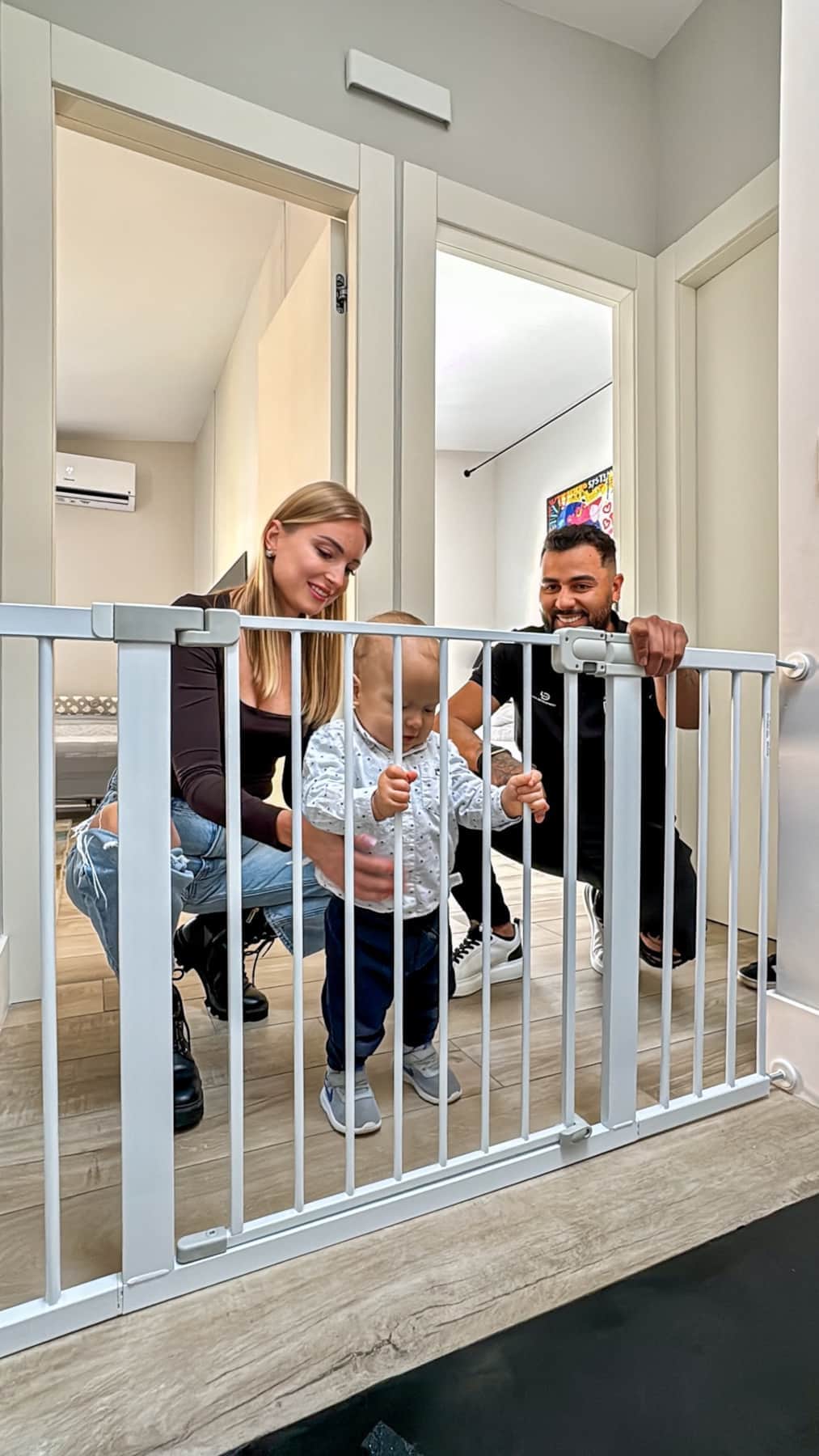
Parents watching baby at safety gate near the stairs, supplied by RENTAL12 family welcome kit in Olbia · Photo RENTAL12
Italy as a whole is a kid-tolerant culture — children at restaurants at 22:00 raise no eyebrows. Sardinia is the same, but with significantly less traffic to worry about. Olbia's centro storico has a permanent ZTL (limited-traffic zone) on most streets, meaning the volume of cars children dodge in Rome or Milan simply isn't here. Outside July and August, the streets in front of cafés are usable as informal playgrounds.
Beach safety specifics: Pittulongu has sandy entry that stays shin-deep for 30–40 metres at low tide — ideal for toddlers. Cala Brandinchi (the "Little Tahiti" of north-east Sardinia) has the same shallow profile. Both have lifeguard towers in July–August. Cala Banana (Golfo Aranci) has slightly deeper entry and is better for stronger swimmers. Avoid the rocky entries at La Marinella and Punta Don Diego with young children.
What RENTAL12 supplies for families: on request and free of charge — IKEA-standard cots, highchairs (free-standing and clamp-on), stair safety gates, bottle warmer, microwave, sanitised toy box, beach umbrella + chairs + sand toys. See the complete family amenities kit and our Sardinia family holiday guide.
What scams should travelers watch for in Sardinia?
Quick answer: Mostly absent compared to Rome or Naples. The four to watch: ZTL fines from driving rental cars into Olbia's restricted zone, unmarked beach-equipment overcharges in Costa Smeralda private zones, restaurants without printed prices in tourist-heavy ports, and summer ferry-queue pickpocketing at Olbia port.
1. ZTL fines. Olbia's historic centre is a Zona a Traffico Limitato — vehicles without a residency permit get an automatic €80–€150 fine per crossing. RENTAL12 guests at apartments inside the ZTL get parking at the licensed Via Sassari 20 facility (free for our guests, the only legal tourist option). Full details in our Olbia parking & ZTL guide.
2. Beach equipment in Costa Smeralda. Some private beach zones — particularly the stretch between Cala di Volpe and Romazzino — quote €80–€200 per sunbed-and-umbrella set in August. Always confirm the price in writing (a photo of the price board works) before sitting down. The public-access strips at most beaches are free, and lifeguarded zones are publicly funded.
3. Menu without printed prices. Italian consumer-protection law requires posted price lists at restaurants. Tourist-heavy waterfront spots occasionally try a verbal-only "menu del giorno" with the price disclosed only at the bill. Ask for the printed menu before ordering, or walk to the next restaurant — there are always plenty of options.
4. Ferry-queue pickpockets. The Olbia port during summer ferry boarding (Civitavecchia, Genoa, Livorno routes) is the one place where organised pickpocket activity is visible. Distractions are classic: dropped maps, request for directions, baby-doll-thrown-at-tourist. Front pockets, zip bags, daypack on front during boarding.
Pickpockets, ferry queues, summer crowds
Quick answer: Summer ferry queues at Olbia port are the main petty-theft risk window. Restaurants, beaches and town centres are not statistically risky. Costa Smeralda nightlife (Porto Cervo, Porto Rotondo) in July–August attracts wealthier crowds and slightly more opportunistic theft (designer-bag focus); standard precautions handle it.
The seasonal pattern in Sardinian opportunistic crime is unusually clean. From mid-October to early May, opportunistic theft against tourists is essentially zero — there aren't enough tourists circulating to support a population of pickpockets. From June through September it ramps up modestly, with two distinct concentrations: (1) the Olbia ferry port at boarding times, and (2) the Costa Smeralda yacht-and-nightclub belt where targets are higher-value but precautions are correspondingly easier. October specifically is one of the safest, quietest, warmest months to visit — see our guide to things to do in Sardinia in October for off-season planning.
Daypack theft from parked cars on remote beach roads is a separate risk to mention: don't leave bags visible in a parked rental at any beach (especially Costa Smeralda turnouts and the road to Cala Brandinchi). Boot or trunk only, with the seats wiped clean.
Are Sardinian beaches safe to swim?
Quick answer: Yes. Most have sandy entry and no dangerous currents. The exception: when the northern wind (Maestrale) blows strong in July–August, exposed Costa Smeralda beaches can develop offshore currents that surprise visitors. Pay attention to lifeguard flags (red = no swim) and avoid swimming alone on flag-red days.
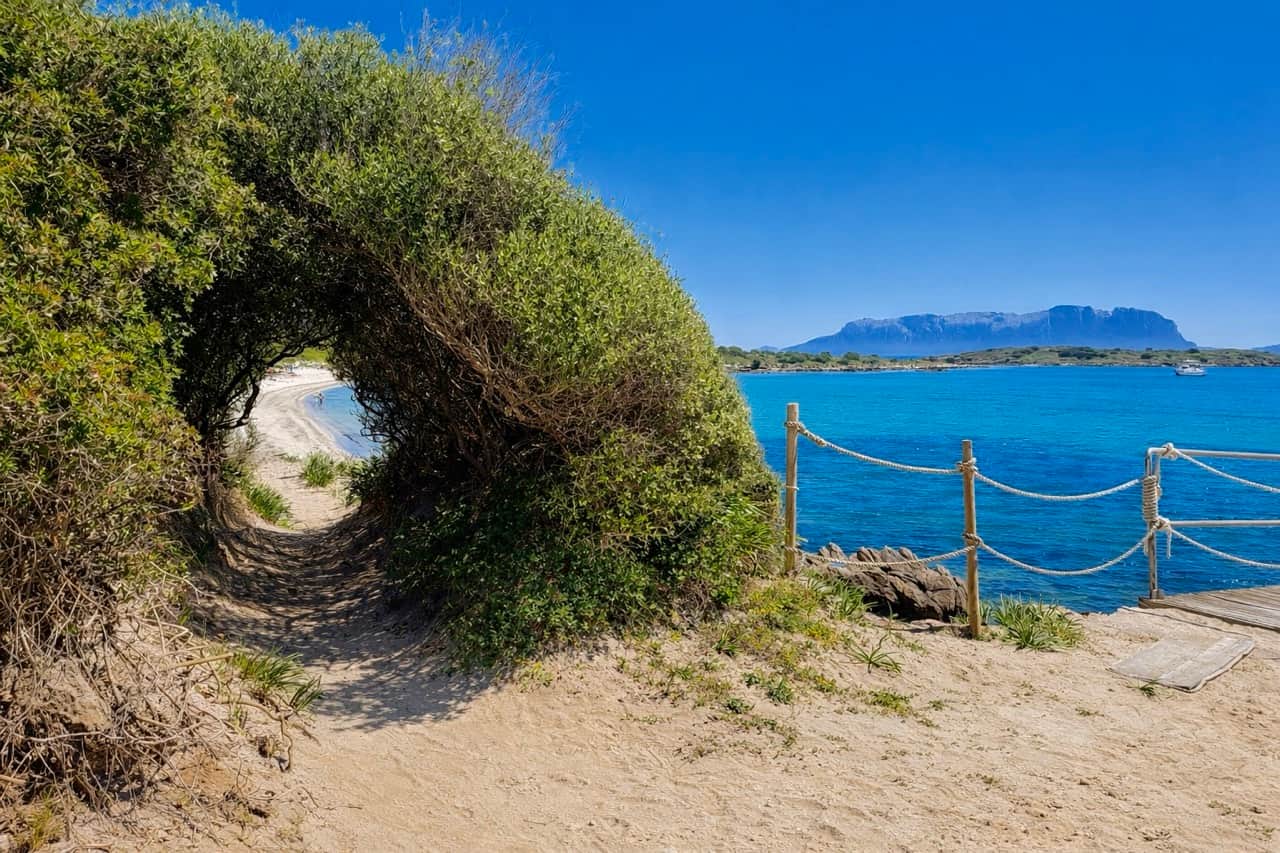
Pittulongu beach view towards Isola Tavolara near Olbia, Sardinia · Photo RENTAL12
Sardinia's coastline is unusual for the Mediterranean: long stretches of fine sand, shallow gradient, exceptionally clear water, and very few sharp drop-offs near shore. The combination is why families with young children consistently rank it above most Italian alternatives. The Bandiera Blu (Blue Flag) accreditation system rates dozens of Sardinian beaches each year for water quality and lifeguard provision.
The single beach-safety variable that catches first-time visitors out is wind. When the Maestrale (north-westerly) blows above 25 knots — typical for 3–6 days each summer — the north-facing Costa Smeralda beaches develop choppy surface conditions and offshore drift that can move a non-strong swimmer several hundred metres from shore in minutes. South-facing beaches (Tavolara coast, Porto Istana, Cala Brandinchi southside) are typically calm on the same days because they're sheltered.
Our practical wind-and-beach decision guide is here: Wind & Beaches — where to swim when the Mistral blows. Same principle in plain language: check the wind direction the morning of, pick a beach on the sheltered side.
Emergency numbers in Sardinia
Quick answer: Dial 112 — the Europe-wide single emergency line that routes to police, ambulance, fire and coastguard. Most call-centre operators speak English. Direct lines also work: 113 (Polizia di Stato), 118 (ambulance only), 1530 (coastguard / maritime). RENTAL12 guests also have a 24/7 host WhatsApp line for non-life-threatening problems.
| 112 | Europe-wide single emergency (police / ambulance / fire / coastguard) |
| 113 | Polizia di Stato (state police, direct) |
| 112 | Carabinieri (military police; also reachable on 112) |
| 118 | Medical / ambulance only |
| 115 | Vigili del Fuoco (fire brigade) |
| 1530 | Guardia Costiera (coastguard, maritime emergencies) |
RENTAL12 guests: see your booking confirmation for the 24/7 host WhatsApp number. For lost keys, plumbing, AC or other non-life-threatening property issues, contact the host before any emergency line. Full directory at our emergency hub. International callers — for SIM cards, eSIM activation and 5G coverage maps so emergency lines reach you reliably, see our mobile & SIM cards in Sardinia guide.
Are there areas to avoid in Sardinia?
Quick answer: Honestly, very few. Inland Barbagia hiking demands GPS and experience (not crime — geography). A handful of Cagliari neighborhoods (Sant'Elia, Is Mirrionis) recommend daytime-only visits. Olbia, Golfo Aranci, and the entire north coast have no avoidance zones for visitors.
The honest answer most local hosts give to "where shouldn't I go?" is that the question doesn't quite apply on Sardinia the way it does on the Italian mainland. There are no equivalents of certain Naples or Rome neighborhoods where the recommendation is to skip entirely. The closest analogues in Cagliari (Sant'Elia, Is Mirrionis) are residential public-housing districts that visitors have no real reason to enter and are unremarkable by day — same as any equivalent district in a French or Spanish city.
The actual safety risk on Sardinia is geography, not crime. The Supramonte and Gennargentu mountain ranges in the Barbagia interior have remote trail sections without phone signal, sudden weather changes, and no maintained signage. Visitors who set out on day hikes without GPS, water and route planning are the recurring rescue cases. If you intend to hike inland, book a local guide or stay on signed routes near towns (Orgosolo, Mamoiada, Oliena).
RENTAL12's safety record
Quick answer: Zero violent-crime incidents across 15,000+ guests since 2021. 34 owner-operated apartments and villas, all in safe neighborhoods, all with verified smart-locks (Vikey) and a 24/7 host contact. 4.9★ aggregate from 2,000+ 5 star reviews.
Owner-operated matters here. RENTAL12 and the AZULIS sub-brand are run directly by Lion Development S.r.l., the company that owns the buildings — not a third-party manager. Every property has been inspected by Floriana or Kristina, has a Vikey smart-lock (no key handovers, no copied keys in circulation), and is reachable on a 24/7 WhatsApp host line in your booking confirmation.
Property locations are deliberate. We don't operate in any neighborhood we wouldn't walk through ourselves at night. The 21 AZULIS apartments cluster around the historic centre (Tigellio, Cavour, Garibaldi, delle Terme) and the Aldo Moro district (Pisano building). The 13 RENTAL12 properties are split across historic centre, Pittulongu, and Golfo Aranci. Every address has a tested route between apartment and beach, restaurant district, and parking.
Verifiable: see 2,000+ 5 star reviews · all 37 properties searchable on a map · trust hub with certifications, awards, legal IDs · our public Trust & Performance Health Score (a transparent quarterly scorecard combining cleanliness, response time, dispute rate and refund metrics).
Frequently asked questions
Is Sardinia safe for tourists in 2026?
Is Sardinia safe for tourists visiting in 2026?
Yes. Sardinia is Italy's safest region — Oristano records 1,572 crimes per 100,000 people vs 6,952 in Milan (ISTAT 2024). Violent crime against tourists is rare. Standard precautions apply at summer ferry queues and nightlife zones. Olbia and the entire north coast have zero avoidance zones for visitors.
All four Sardinian provinces sit in the lower half of Italy's safety ranking and the island as a whole records 60% fewer violent crimes than the national average. The classic threats travelers worry about on the mainland — organised pickpocket teams, ATM-skimming, aggressive panhandling — exist here at much smaller scale and largely cluster around the Olbia ferry port during peak summer boarding.
Is Sardinia safe for solo female travelers?
Is Sardinia safe for solo female travelers in Olbia and Sardinia generally?
Yes. The evening passeggiata culture means everyone — including women alone — is out walking in town centres until late. Catcalling-as-default-greeting common in some mainland Italian cities is largely absent in Sardinian towns. Standard solo-travel precautions still apply: share itinerary, charged phone, taxi from clubs after midnight.
Sardinian small-town culture is more reserved than coastal mainland Italy — restaurant staff and shop owners are friendly but rarely flirtatious. Solo female guests consistently describe Sardinia as "calmer, less performative" than a Rome or Naples leg of the same trip. Practical tips: beachwear stays at the beach (it's a municipal-decoro fineable offence to walk through town centres in a bikini), and use pre-booked taxis after 23:00 when bus services thin out.
Is Sardinia safe for families with young children?
Is Sardinia safe for families travelling with young children and babies?
Yes. Family-friendly beaches like Pittulongu and Cala Brandinchi have shallow entry and lifeguarded sections in summer. Restaurants welcome children at any hour. Olbia old town is car-free or low-traffic ZTL — kids can cycle and walk freely. RENTAL12 supplies cots, highchairs, stair gates and a sanitised toy box on request.
Specific notes: Pittulongu stays shin-deep for 30–40 metres at low tide — ideal for toddlers. Cala Brandinchi ("Little Tahiti") has the same shallow profile. Both have lifeguard towers in July–August. Avoid the rocky entries at La Marinella and Punta Don Diego with young children. See our Sardinia family holiday guide for full property + amenity matrix.
What's the emergency number in Sardinia?
What is the emergency phone number for police, ambulance and fire in Sardinia, Italy?
112 — the Europe-wide single emergency number, routing to police, ambulance, fire, coastguard. Most call-centre operators speak English. Direct lines also work: 113 (Polizia di Stato), 118 (ambulance only), 1530 (coastguard). RENTAL12 guests also have a 24/7 host WhatsApp line for non-life-threatening issues.
112 in Italy connects you to a regional dispatcher who triages to the appropriate service — saves you remembering specific numbers and works for English-speaking callers. The Italian fire brigade (Vigili del Fuoco) direct line is 115. The maritime / coastguard line for boat emergencies is 1530. Full numbers card in our emergency hub.
What tourist scams should I watch for in Sardinia?
What tourist scams or rip-offs should travelers watch for in Sardinia and Olbia in 2026?
Mostly absent compared to Rome or Naples. Watch for: ZTL fines from rental cars driven into Olbia's restricted zone (read posted signs), beach-equipment overcharges in unmarked Costa Smeralda private zones, restaurants without printed prices in tourist-heavy ports. Pickpockets cluster at the Olbia ferry terminal during summer boarding — front pockets, zip bags.
The four to watch in order of likelihood: (1) ZTL fines €80–150 per crossing — RENTAL12 guests get free legal parking at Via Sassari 20 (parking guide); (2) sunbed-and-umbrella at €80–200 in unmarked Costa Smeralda strips — confirm price in writing first; (3) verbal-only "menu del giorno" — ask for the printed menu by law; (4) summer ferry-port pickpockets — daypack on front, zip bags during boarding.
Verified, owner-operated, in the safest region of Italy
34 owner-operated apartments and villas in Olbia and Golfo Aranci. Zero violent-crime incidents across 15,000+ guests since 2021. 4.9★ from 2,000+ 5 star reviews. Direct-booking only, no agency markup.
Auch auf Deutsch: Sardinien Sicherheit & Reisehinweise 2026 · In italiano: La Sardegna è sicura? Guida 2026