Sardinia Blue Zone: Why Sardinians Live the Longest Lives in the World
The original Blue Zone, decoded for travellers — what the science actually says, what shepherds eat, and how to visit Ogliastra from your Olbia coastal base. Updated 25 April 2026.
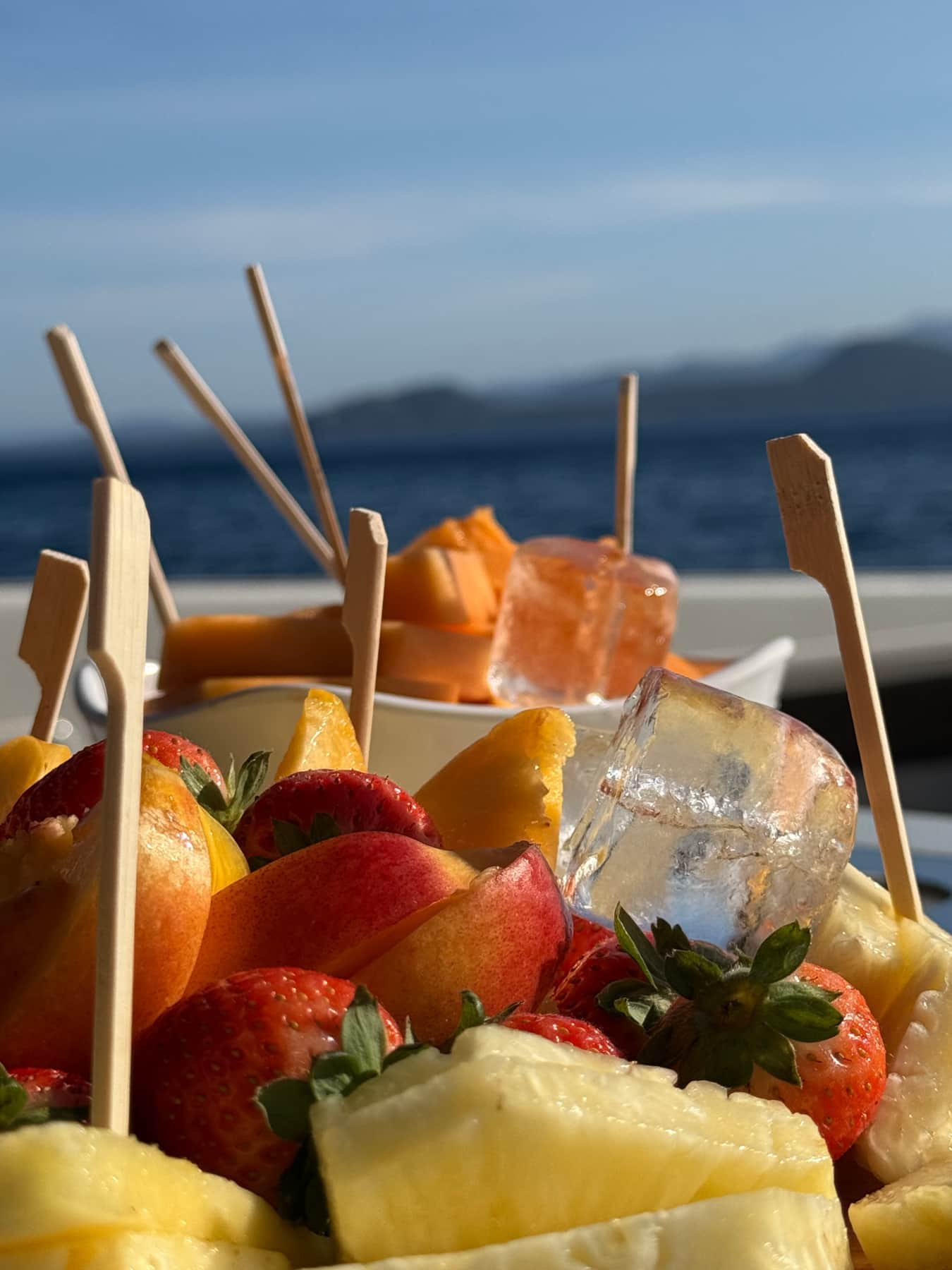
Bowl of fresh fruit — is it the food? · Photo: RENTAL12
What the Blue Zone actually is
In 2004, Italian medical statistician Gianni Pes and Belgian demographer Michel Poulain were mapping centenarian density across Sardinia. In a few mountain villages of central-eastern Ogliastra, the numbers refused to behave: men were reaching 100 at a rate the rest of the world had never documented. They drew a blue circle on the map. The colour stuck.
Their AKEA study — published in Experimental Gerontology later that year — gave the world the term Blue Zone. Four more zones were identified afterwards (Okinawa, Nicoya, Ikaria, Loma Linda), but Sardinia is the prototype: the first place where exceptional male longevity was rigorously verified using birth records back to the 19th century.
American author Dan Buettner brought the science to a global audience — first through National Geographic in 2005, then through his books, and most recently in the Netflix series Live to 100: Secrets of the Blue Zones (2023), where Episode 1 opens in Sardinia.
Why Sardinia, and not somewhere else?
Researchers point to four interlocking factors. None of them works alone — that's the whole point of a Blue Zone.
A semi-vegetarian Mediterranean plate
Pane carasau flatbread, fava and garbanzo beans, garden vegetables, pecorino and ricotta from sheep, wild fennel. Meat is for Sundays and feasts, not weeknights. → Sardinia food guide
A glass or two with every meal
Cannonau, the local clone of Grenache, shows polyphenol levels reported at two to three times other reds. Shepherds drink it with food, with friends, never alone. → Why Sardinian wine
A lifetime walking steep ground
No gym, no jogging — just decades of shepherding up and down granite hills with the flock. Constant low-intensity activity is the Blue Zone's quiet engine. → Sardinia things to do
Three generations under one roof
Elders are not parked — they're cooked for, walked with, and consulted. Strong family bonds correlate with reduced cortisol and better outcomes across decades. → About RENTAL12
The food: it really is the food
If you eat your way through one Blue Zone village, you'll notice three things almost immediately: meat is rare, vegetables are everywhere, and the dairy comes from sheep, not cows. Sardinian shepherding has produced an animal-protein source — pecorino sardo, ricotta, fresh sheep's milk — that delivers a different fatty-acid profile from cow's dairy and pairs naturally with the grain and bean staples.
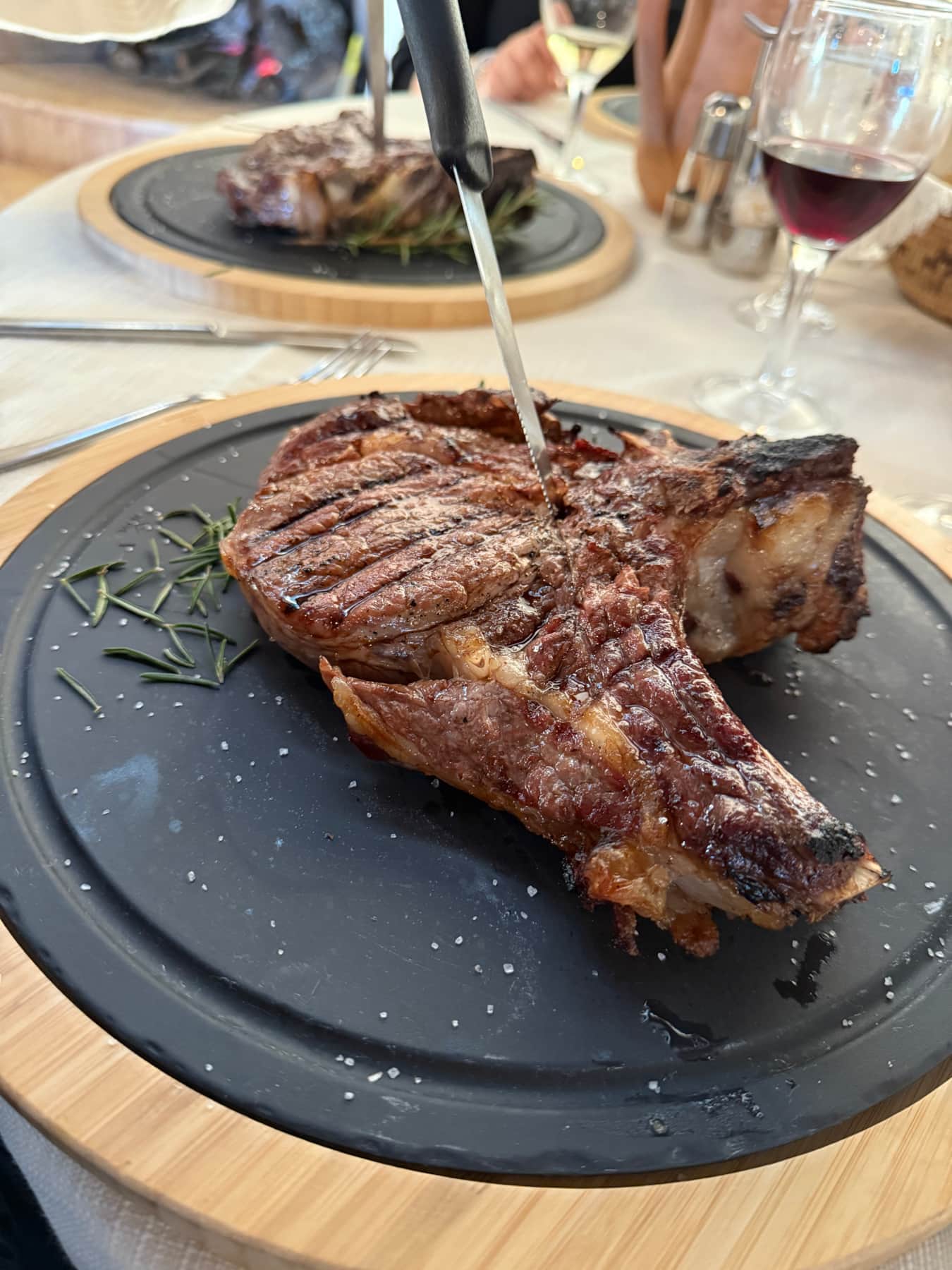
Real meat, no hormones — maybe that's the secret · Photo: RENTAL12
When meat does appear, it's small portions of pasture-raised lamb, pork or wild boar — animals that ate what the hillside provided, not feed-lot grain. No hormones, no industrial ration. Eggs come from chickens that ranged the courtyard. Even the bread — pane carasau, the wafer-thin shepherd's flatbread — is sourdough, slow-fermented, and unbleached.
Olive oil is the only fat. Tomatoes are sun-ripened and seasonal. Wild fennel, mint, myrtle, rosemary and sage substitute for salt. The result is a diet quietly low in refined sugar, low in industrial seed oils, high in fibre, high in fermented dairy, and rich in polyphenols from herbs and Cannonau. See our full Sardinia food guide for the dishes you'll meet at every long-table lunch.
Sardinian shepherds carry a wineskin called su tascapane and share it at noon, sitting on the same stone wall their grandfather sat on. The point is the sharing, not the wine. Pes and Poulain identified this social ritual — meals taken with others, every day — as a longevity factor in its own right.
Where the Blue Zone actually is
The official Blue Zone is fourteen contiguous villages in the inland mountains of Ogliastra and the southern Barbagia, central-eastern Sardinia. The headline names: Villagrande Strisaili, Seulo, Arzana, Talana, Urzulei, Baunei, Ulassai, and Perdasdefogu. Most sit between 600 and 900 metres altitude. Most have populations under 1,500. Most look — at first glance — completely unremarkable.
Geneticists have a name for what makes them remarkable: genetic isolate. Mountain barriers, poor roads, and centuries of inward marriage have preserved a small founder population — measurable in the M-haplogroup mtDNA frequency, which is unusually high in central Sardinia. Combined with diet and movement, the genetics seem to load the dice toward longevity.
Build your own Blue Zone visit
Most travellers stay on the Olbia coast for beaches, restaurants and direct flights, then make day trips inland. Six tie-ins from our wider RENTAL12 ecosystem to plan around:
Day trips from Olbia
Drive times, routes, and which Blue Zone villages are reachable in a single day.
Sardinia food guide
The dishes you'll see on every Blue Zone long-table lunch — pane carasau, fregola, malloreddus.
Why Sardinian wine
Cannonau, Vermentino, Carignano and the polyphenol story behind the longevity headlines.
Things to do in Sardinia
Hikes, beaches and inland routes that complete a Blue Zone trip without making it a museum visit.
Best places in Sardinia
Where the Blue Zone fits inside the larger map of Sardinian places worth your time.
Do I need a car in Sardinia?
For Ogliastra, the answer is yes — public transport is sparse, and the SS125 is the only sensible route.
From Olbia to the Blue Zone, practically
Olbia Costa Smeralda Airport (OLB) is the closest international gateway. From the city, the SS125 Orientale Sarda runs south along the coast then climbs inland toward Ogliastra. Driving times from Olbia: Villagrande Strisaili — about 2h 15m. Talana — about 2h 30m. Urzulei — about 2h 30m. Seulo — about 3h.
The smart pattern: base in an Olbia apartment, do two or three day trips into the mountains, eat at a family agriturismo at lunch (the long, slow Sardinian pranzo is the Blue Zone in miniature), and head back to the coast for sunset. Staying inland is also possible — small village B&Bs and agriturismi exist — but most travellers find the coastal base + day-trip pattern more flexible.
Sardinia Blue Zone — frequently asked questions
Where exactly is the Sardinia Blue Zone?
What is the Sardinia Blue Zone and where exactly is it?
The Sardinia Blue Zone is a cluster of 14 villages in the inland mountains of Ogliastra and Barbagia, central-eastern Sardinia, where men reach 100 years at the highest documented rate on Earth — first identified in 2004 by demographers Gianni Pes and Michel Poulain.
Headline names include Villagrande Strisaili, Seulo, Arzana, Talana, Urzulei, Baunei, Ulassai and Perdasdefogu. They sit between roughly 600 and 900 metres altitude, mostly under 1,500 inhabitants each, and are reachable from Olbia by car in 2 to 3 hours along the SS125.
Why was Sardinia called the first Blue Zone?
Why was Sardinia called the first Blue Zone?
Pes and Poulain literally drew a blue circle on a map around the Ogliastra villages where male longevity was statistically extreme — the colour stuck and "Blue Zone" became the name for any region with verified extreme longevity, with Sardinia recognised as the prototype.
The 2004 AKEA study in Experimental Gerontology used Italian municipal birth records back to the 19th century — the most rigorous longevity verification done at that time — and Sardinia became the benchmark against which the next four Blue Zones (Okinawa, Nicoya, Ikaria, Loma Linda) were measured.
What do Blue Zone Sardinians actually eat?
What do Sardinians in the Blue Zone actually eat?
A semi-vegetarian Mediterranean diet built on pane carasau flatbread, fava and garbanzo beans, garden vegetables, sheep's-milk pecorino and ricotta, wild fennel and herbs, small amounts of meat reserved for Sundays and feasts, and one or two glasses of Cannonau red wine with meals.
Olive oil is the only fat. Sugar is rare. Industrial seed oils are absent. Meat — when it appears — is pasture-raised lamb, pork or wild boar, in small portions. The diet is naturally low-glycaemic, high-fibre, polyphenol-rich, and built around what the village garden, the family flock, and the hillside provided.
Is Cannonau wine really linked to longer life?
Is Cannonau wine really linked to longer life?
Cannonau, Sardinia's main red grape (a clone of Grenache), shows polyphenol levels reported at two to three times other reds in some analyses — Blue Zone shepherds drink it daily with meals and never alone, and researchers see it as one factor among many, not a magic bullet.
The pattern matters as much as the wine: small daily doses (one or two glasses), always with food, always with company. Heavy or solitary drinking shows the opposite correlation everywhere it's studied. Cannonau is a piece of the puzzle, not the puzzle.
How do I visit the Sardinia Blue Zone from Olbia?
How do I visit the Sardinia Blue Zone from Olbia?
Olbia Costa Smeralda Airport is the closest international gateway to the Ogliastra Blue Zone — drive south on the SS125 Orientale Sarda for about two and a half hours to reach Villagrande Strisaili, Talana or Urzulei, with a RENTAL12 Olbia apartment as your coastal base for day trips.
A car is essential — public transport into Ogliastra is sparse and unreliable. Most travellers do the Blue Zone as a 2 or 3 day-trip rotation from Olbia rather than basing inland; the coast offers more food, more flights, and more after-dark life.
What makes Sardinia's Blue Zone different from the other four?
What makes the Sardinia Blue Zone different from the other four?
Sardinia is the only Blue Zone where men live as long as women — roughly a 1:1 male-to-female centenarian ratio versus the world average of about 1:5 — driven by mountain shepherding, a genetic isolate (M-haplogroup mtDNA), and tight multi-generation family structure.
In Okinawa, Ikaria and Nicoya, women dominate the centenarian counts. In Sardinia, men keep up. Pes and Poulain attribute it to the lifelong shepherding role and the protective effect of strong family and village ties on male mental health.
Is the Sardinia Blue Zone worth visiting, or is it just hype?
Is the Sardinia Blue Zone worth visiting as a traveller, or is it just hype?
It's worth visiting if you treat it as a slow, respectful trip — small mountain villages, family-run agriturismi, no resorts, and walking the same shepherd paths the centenarians walked — and pair it with Olbia's coast for beaches, dining and direct international flights.
It is not a theme park. There is no museum, no big ribbon-cut visitor centre. The whole point is that ordinary daily life in Ogliastra is the attraction. Travellers who arrive expecting a packaged experience leave underwhelmed; travellers who arrive curious leave changed.
Plan a Sardinia trip that includes the Blue Zone
Stay on the Olbia coast — the Blue Zone is a 2-to-3-hour drive south. Browse 37 owner-verified RENTAL12 properties, with the AZULIS premium collection for travellers who want elevated finishes.
4.9 ★ from 2,000+ 5 star reviews · IUN F1530 / CIN IT090047B4000F1530
RENTAL12 Ecosystem
Search & Stay
Trust & Help
RENTAL12 — Lion Development SRL · IUN F1530 / CIN IT090047B4000F1530 · Privacy