Sardinian People, Culture & Etiquette: 12 Unwritten Rules
How Sardinians eat, greet, rest and celebrate, and how to be a guest locals remember fondly, from 23 years of living in Olbia.
Quick Guide
Sardinians are a distinct people with their own language, Sardu, and one of only five Blue Zones on Earth, home to Europe's oldest population cluster. Twelve unwritten rules shape daily life: coffee standing at the bar, swimwear stays at the beach, dinner after 20:30, quiet hours 14:00 to 16:00, tipping always optional. Learn these and Sardinia opens up.

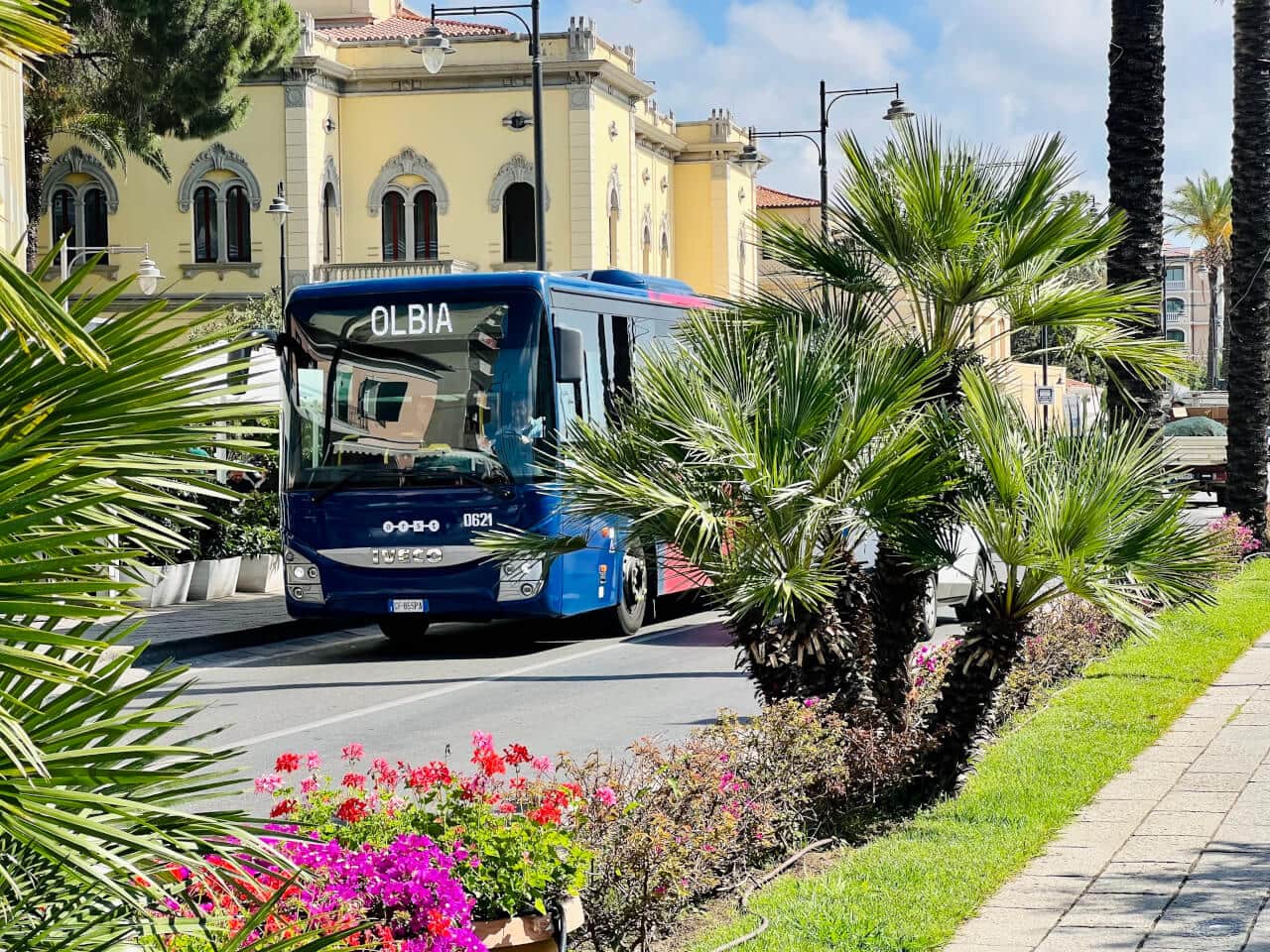
APE three-wheeler driving past Corso Umberto, Olbia · Foto RENTAL12
Live tools for your Olbia stay
Real-time helpers that update every day with Sardinia conditions.
Who are the Sardinian people?
Quick answer: Sardinians are a distinct people, not simply Italians on an island. They have their own recognised language (Sardu), a Bronze Age Nuragic heritage with around 7,000 stone towers, and one of the world's five Blue Zones, where men reach 100 at a rate found almost nowhere else.
Ask anyone here who they are and the answer is the same: fiercely Sardinian first, Italian second. The clearest proof is Sardu, a minority language officially recognised by the Italian state and spoken by over a million people. It is not an Italian dialect; linguists consider it the closest living language to Latin.
The roots are visible everywhere: around 7,000 nuraghi, cone-shaped stone towers built between 1800 and 1100 BC, dot the island. Add the Blue Zone of the central mountains, one of only five regions worldwide where people routinely live past 100, and you understand why Sardinians defend their pace of life.
In practice: compliment the island rather than comparing it to the mainland, and never call a Sardinian "basically Italian" at the dinner table. Our honest take on whether Olbia is worth visiting explains why the north-east is the easiest entry into real Sardinian life.
Greetings, language & everyday interactions
Quick answer: Say buongiorno until mid-afternoon and buonasera after, give two cheek kisses (left cheek first, then right) to people you know, use the formal lei with strangers and elders, and drop one Sardu word, ajò (let's go), to earn smiles anywhere in the Gallura.
Greetings are the currency of daily life: a clear buongiorno in a bakery or pharmacy is expected, and buonasera takes over from roughly 15:00. Between friends the two-kiss greeting is standard: left cheek first, then right. Three kisses is a French habit; here it just causes a head-bump.
Italian has two registers and Sardinians notice your pick. Use lei (the formal you) with elders, shopkeepers and officials; switch to tu only when invited. And learn one Sardu word: ajò, pronounced ah-YO, means "come on, let's go" and works as encouragement, impatience or pure joy depending on tone. Use it at the market on a walk through Olbia's old town and someone will teach you three more.
The 12 unwritten rules of Sardinian etiquette
Quick answer: The 12 rules locals never write down: coffee standing up, no swimwear in town, dinner after 20:30, respect the riposo, greet every shopkeeper, never rush a meal, tip by rounding up, cover up in churches, leave the sand alone, queue patiently, try Italian first, and treat Sunday lunch as sacred.
1. Drink your coffee standing at the bar
An espresso at the counter costs 1.20 to 1.50 EUR and takes ninety seconds. Sitting down can double the price. And cappuccino is a breakfast drink: order one after lunch and everyone knows you are a tourist.
2. No swimwear or bare torso in town
The beach ends where the pavement begins. Walking through town in a bikini or shirtless is disrespectful, and several municipalities enforce it with on-the-spot fines. A t-shirt and shorts over the swimsuit solves it.
3. Eat dinner on the local clock, 20:30 or later
Most kitchens close between 15:00 and 19:30. Locals sit down between 20:30 and 21:30; book for then and the room is alive instead of empty.
4. Never make noise during the riposo
Between 14:00 and 16:00 the island rests, and again after 23:00. No drilling, no loud music, no shouted phone calls in the courtyard. Olbia condominium rules and the neighbours both take these hours seriously.
5. Greet when entering shops
Walking into a shop in silence reads as rude. One buongiorno on the way in, one grazie or arrivederci on the way out. It changes how every interaction goes, especially in family-run places.
6. Don't rush the meal, and ask for the bill
A table is yours for the evening; nobody will hurry you out. The flip side: the bill never arrives unasked, because that would be rude. When ready, say "il conto, per favore".
7. Tipping means rounding up, never an obligation
Service is included and staff are salaried. Locals leave the coins or round a 47 EUR dinner to 50 when it was excellent. A 20% American-style tip genuinely confuses people.
8. Cover shoulders and knees in churches
Churches like the Basilica di San Simplicio in Olbia are active places of worship; covered shoulders and knees are the rule for everyone. A light scarf in your day bag makes beach clothes church-ready in seconds.
9. Never take sand, shells or pebbles
Regione Sardegna law protects beach material, with fines up to 3,000 EUR and airport baggage checks that really happen. That bottle of white sand is not a souvenir here; it is an offence.
10. Queues are social, be patient
The line at the butcher doubles as the neighbourhood news exchange. Things move piano piano, slowly slowly, and visible impatience earns nothing. Build ten extra minutes into every errand.
11. Try three words of Italian first
Buongiorno, per favore, grazie. That is the whole entry fee. Open in Italian, even badly, and most locals under 50 switch to English with a smile. Open in English without trying and the conversation gets noticeably cooler.
12. Sunday lunch is sacred
From about 13:00 on Sunday the island belongs to families around long tables. Shops and some restaurants close, supermarkets shut early, and plans should bend around it. Get invited to one and cancel everything else.
Staying in Olbia? Sleep in the middle of it
37 owner-operated apartments & villas in Olbia & Golfo Aranci — 4.9★ from 2,000+ 5 star reviews.
Browse apartmentsExplore collectionsCafé, restaurant & tipping etiquette
Quick answer: Espresso at the bar costs 1.20 to 1.50 EUR, the coperto cover charge of 1.50 to 3 EUR per person is normal and legal, dinner service starts around 19:30 but fills after 20:30, and tipping is a round-up gesture rather than a duty anywhere on the island.
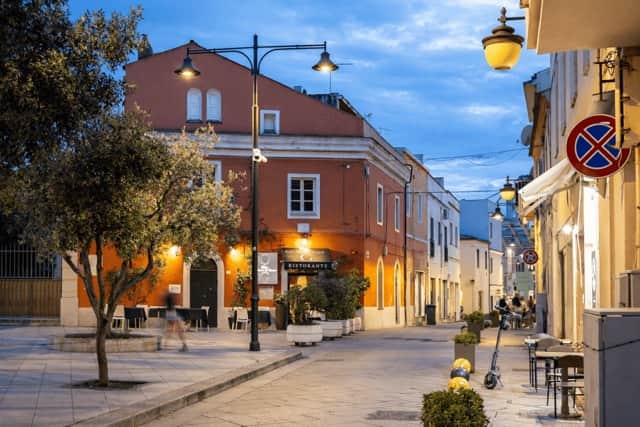
Evening shot of Olbia city center near Officina del Gusto · Foto RENTAL12
The first thing on a restaurant bill that surprises visitors is the coperto, a cover charge of 1.50 to 3 EUR per person for bread, linen and the seat itself. It is printed on the menu, legal, and not a scam. The second surprise is how little tipping matters; we wrote a full guide to tipping in Sardinia and Italy because guests kept over-thinking it. Round up, or don't. Both are fine.
Aperitivo, the pre-dinner drink with snacks between 18:30 and 20:30, bridges beach time and the late Sardinian dinner. A glass of Vermentino di Gallura DOCG, the island's only DOCG wine, grown right here in the north-east, runs 4 to 6 EUR with snacks included. Our round-up of the best bars and aperitivo spots in Olbia and Golfo Aranci maps the terraces locals actually use, and why Sardinian wine is worth your attention explains what makes Vermentino and Cannonau special.
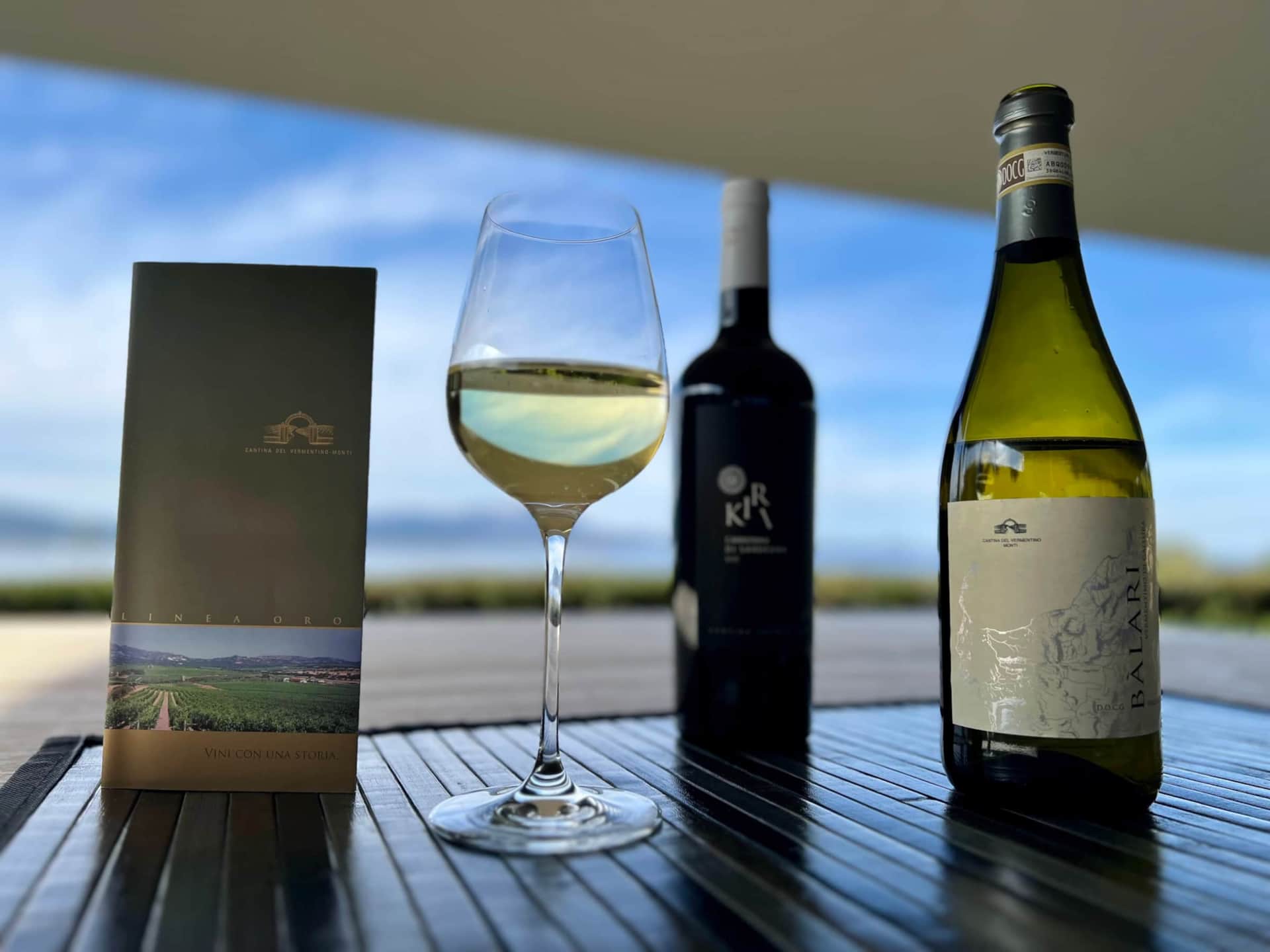
Two bottles of Cantina del Vermentino · the celebrated Sardinian Vermentino di Gallura DOCG · Foto RENTAL12
With children, relax: kids are welcome everywhere at any hour. Our picks for family-friendly restaurants in Olbia and the wider list of restaurants in Olbia we send guests to cover the practical side; the Sardinian food guide tells you what to order: culurgiones, porceddu, seadas with bitter honey.
Beach & dress etiquette
Quick answer: Most beaches around Olbia are free, towels do not reserve spots, August mornings before 9:00 and late afternoons after 17:00 are when locals go, and taking sand, shells or pebbles home risks a fine of up to 3,000 EUR under Regione Sardegna law.
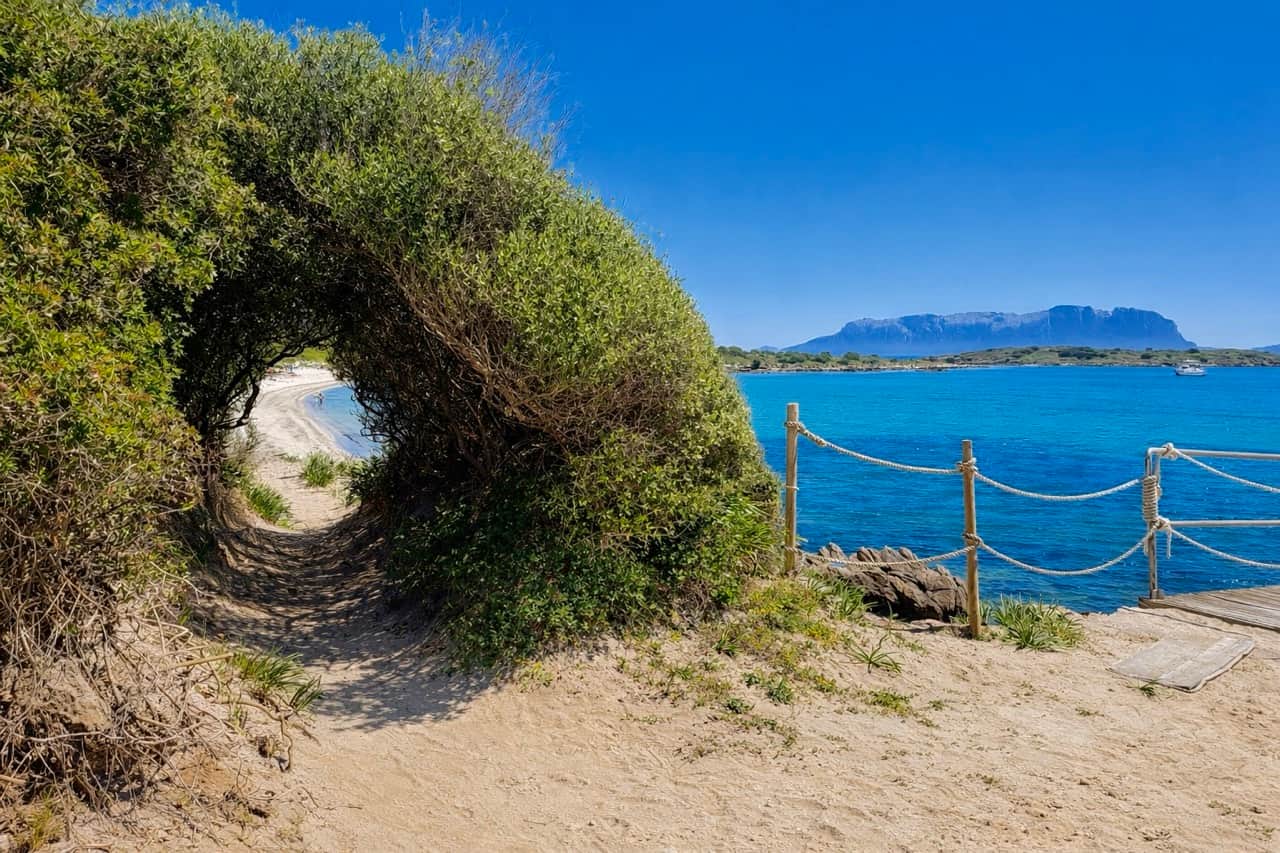
Beach view looking to Isola Tavolara from Pittulongu · Foto RENTAL12
In August locals swim before 9:00 or after 17:00, leaving midday to visitors. A towel left at dawn to claim a spot is frowned upon and, on many beaches, cleared by patrols. If you are unsure which stretches charge for sunbeds, our explainer on whether you must pay for beaches in Sardinia settles it, and the guide to the best beaches around Olbia and Golfo Aranci tells you where to point the car.
On the beach almost anything goes, but full nudity is limited to a few tolerated coves, and even a beach kiosk appreciates a shirt at the counter. Our packing essentials list for Olbia covers the small things people forget.
Being a good guest: apartments, noise & recycling
Quick answer: Inside an Olbia apartment building, keep noise down between 14:00 and 16:00 and after 23:00, sort waste into the strict door-by-door recycling categories with fixed collection days, and drink the tap water if you like; it is safe, though most locals prefer bottled for taste.
Olbia runs door-by-door waste collection with separate bins for organic, paper, plastic and metal, glass, and residual waste, each with its own pickup day. A wrongly sorted bin is left uncollected for the whole building. Our step-by-step Sardinia recycling guide decodes the categories and the calendar in five minutes.
Two more things mark a considerate guest. Water is managed carefully here, so shorter showers in July and August are a courtesy, and the facts on tap water in Sardinia are better than the rumours suggest. Energy: all 37 of our owner-operated apartments run on certified renewable electricity under the RENTAL12 eco-powered label, part of the wider effort in our sustainable travel in Sardinia guide. Switching off the air conditioning when you head out continues a very Sardinian habit: not wasting what the island provides.
Festivals & living traditions
Quick answer: Sardinia's calendar of living traditions runs from the Sant'Antonio bonfires in January and the Mamuthones masks of Carnival, through the Cavalcata Sarda parade in May and the Candareri of Sassari in August, to Olbia's own Festa di San Simplicio each May, honouring the city's patron saint.
These are not shows for visitors; they are the island talking to itself. In mid-January, villages across the interior light bonfires for Sant'Antonio Abate, with wine and blessed bread for everyone. At Carnival, the Mamuthones of Mamoiada walk in sheepskins and black wooden masks under 30 kilos of bronze bells, a ritual older than Christianity. In late May, Sassari's Cavalcata Sarda brings thousands of riders from every corner of the island, and on 14 August it carries giant wooden candles through the streets for the Faradda di li Candareri, a vow kept since the plague years.
Olbia's own moment comes in mid-May with the Festa di San Simplicio, a week of processions, concerts and fireworks around the granite basilica holding the relics of the city's patron saint. Entry to the Archaeological Museum, with its recovered Roman shipwrecks, is free year-round. If your dates miss the festivals, the things to do in Olbia guide and our pick of day trips from Olbia will fill the calendar anyway.
Live like a local: why we base guests in Olbia
Quick answer: Staying inside a real, working town is the shortcut to every rule on this page. From Olbia you greet the same barista each morning, reach Costa Smeralda and 20 beaches within half an hour, and live the etiquette instead of reading about it.
Everything above is theory until you live it. That is why our family company, founded in 2021 and running 37 owner-operated apartments in Olbia and Golfo Aranci, bases guests in the centre of a working Sardinian town rather than a gated resort. Floriana has lived here since 2003, and her case is simple:
"Olbia is the perfect middle point. Everything you want — beaches, food, walks, boats, mountain viewpoints — starts from here." — Floriana Panvini Rosati, CEO & Co-Founder of RENTAL12 (Lion Development SRL), Olbia resident since 2003
Kristina, who runs operations, adds the part most visitors get backwards:
"People think they need to stay far from the city to enjoy the beaches. But from Olbia, you reach everything faster — and with better food, better walks and easier logistics." — Kristina, Co-Founder & COO of RENTAL12

RENTAL12 co-founders Floriana and Kristina seated on the sofa at the AZULIS-themed Olbia head office · Foto RENTAL12
If that lands, start with why Olbia beats the resort enclaves, then narrow down with where to stay in Olbia. For budgets and timing, what Sardinia really costs in 2026 and how safe Sardinia actually is answer the two questions every first-timer asks. Olbia is not the compromise option; it is the local option.
Frequently asked questions
Are Sardinian people Italian?
Are the people of Sardinia ethnically and culturally Italian, or are they a distinct people?
Sardinians are Italian citizens but identify first as Sardinian, a distinct people with their own recognised language, Sardu, and a culture far older than the Italian state.
Genetic studies place Sardinians apart from mainland Italians, the closest living population to Europe's early Neolithic farmers. The island joined unified Italy in 1861 but kept its language, festivals and food. "You Sardinians" earns a better evening than "you Italians".
Is tipping expected in Sardinia?
Do restaurants, bars and taxis in Sardinia expect a tip, and how much should I leave?
No, tipping is never obligatory in Sardinia; locals simply round the bill up by one or two euros when the service was good.
Staff are salaried and the coperto already contributes to service. Rounding a 28 EUR bill to 30 is a warm gesture; leaving 20% reads as a misunderstanding. Taxis: round to the nearest euro.
Can I walk around town in swimwear?
Is it acceptable to walk through Olbia or other towns in a bikini or without a shirt?
No, walking through a Sardinian town in swimwear or bare-chested is considered disrespectful and several municipalities issue on-the-spot fines for it.
The boundary is the edge of the sand. A t-shirt and shorts over the swimsuit is all it takes, and every local does exactly that, even for a two-minute gelato stop.
What language do Sardinians speak?
Do people in Sardinia speak Italian, Sardinian or English, and which should I use as a visitor?
Sardinians all speak Italian, and many also speak Sardu, a recognised minority language descended directly from Latin, plus English in tourist areas.
Around Olbia you will also hear Gallurese, a variety with Corsican roots. Italian is your working language; nobody expects Sardu, but one ajò is noticed and appreciated everywhere.
What should I wear to churches?
What is the dress code for visiting churches in Sardinia, such as the Basilica di San Simplicio?
Cover your shoulders and knees inside Sardinian churches; a light scarf carried in your day bag is enough to fix beachwear in seconds.
This applies to everyone, not only women. Sleeveless tops, short shorts and bare feet get visitors politely turned away. During mass, sightseeing pauses; come back in an hour.
Is it rude if I don't speak Italian?
Will locals in Sardinia be offended if I only speak English and no Italian at all?
No, it is not rude; locals genuinely appreciate three words of Italian and most people working in tourism happily switch to English.
Begin with buongiorno and per favore, then ask "parla inglese?", and doors open. Begin in fast English with no greeting and the same people become mysteriously less fluent. Effort, not fluency, counts here.
Related guides from our Olbia team
Stay where the etiquette is everyday life
37 owner-operated apartments in Olbia and Golfo Aranci, run by the family that wrote this guide. Rated 4.9/5 across 2,000+ 5 star reviews since 2021.
All Sardinia guides by our Olbia team · Why guests trust RENTAL12 · Win a holiday in Olbia
IUN F1530 · CIN IT090047B4000F1530 · Privacy policy
Auch auf Deutsch: Sardische Kultur & Knigge — 12 ungeschriebene Regeln · In italiano: Cultura e tradizioni sarde — guida 2026