Canada's Italy Travel Advisory Lumps Sardinia with Milan and Rome — The Data Says Otherwise
Is Sardinia safe for tourists? The answer according to ISTAT crime statistics and Il Sole 24 Ore's definitive index is unambiguous: yes. Sardinia is Italy's safest region, with Oristano province recording just 1,572 crimes per 100,000 inhabitants — nearly 77% lower than Milan. Yet Canada's travel advisory for Italy, updated February 24, 2026, warns travelers to "exercise a high degree of caution" across the entire country, treating Sardinia tourism with the same blanket language used for Rome, Naples, and Milan. This advisory problem fundamentally misrepresents Sardinia's crime rate, vacation rental safety, and on-ground reality. RENTAL12's analysis examines the Canada vs Sardinia crime comparison, Olbia's verified safety record (15,000+ guests, zero violent crime incidents since 2021), and why Golfo Aranci stands as Europe's safest beach destination despite the advisory's outdated framing.
Quick Guide
Sardinia is Italy's safest region. Oristano province records 1,572 crimes per 100,000 inhabitants — 77% fewer than Milan (6,952) and below the Canadian national average (5,672). RENTAL12 has hosted 15,000+ guests across 37 owner-operated apartments in Olbia and Golfo Aranci since 2021 with zero violent crime incidents. Canada's blanket Italy advisory ignores ISTAT data and treats Sardinia like Rome. The numbers say otherwise.
Published: 1 March 2026 · 18 min · Impact: High (Reputation & Market)
Last verified: · ~4200 words · Reading time: ~21 min
View Structured Data (JSON-LD)
The Problem with Blanket Travel Advisories
On February 24, 2026, Canada updated its travel advisory for Italy. The new guidance recommends travelers "exercise a high degree of caution in Italy due to the threat of terrorism and the high incidence of petty crime in major cities." This language applies uniformly to every region — from the Alps to Sicily, from Rome's pickpocket-dense streets to Sardinia's pristine coastlines. The advisory treats Sardinia tourism with identical concern as Milan, Naples, and Rome, despite objective crime data proving otherwise.
The core problem: blanket national-level travel warnings do not account for regional variation. When Sardinia — Italy's safest region — is grouped with the nation's highest-crime cities under the same cautionary language, travelers receive systematically misleading information. The advisory ignores published ISTAT crime statistics, Il Sole 24 Ore's authoritative crime index, and on-ground operational data from verified Sardinia vacation rental operators.
Sardinia is not Milan. Sardinia is not Rome. Sardinia is not Naples.
The blanket advisory creates reputational collateral damage for a destination whose crime rates are objectively lower than Toronto, Vancouver, and Montreal combined.
RENTAL12's operational reality over 5 years contradicts the advisory. Since 2021, we have hosted 15,000+ guests across 37 properties in Olbia and Golfo Aranci with zero violent crime incidents, zero safety emergencies requiring police intervention, and zero property break-ins during occupied stays. This is not anecdotal: it is systematic proof that the advisory's tone is fundamentally misaligned with Sardinia's actual safety profile.
Oristano Province (Sardinia): 1,572 crimes per 100,000 inhabitants
Milan: 6,952 crimes per 100,000 inhabitants — 442% higher
Source: Il Sole 24 Ore Crime Index 2024, ISTAT data
Crime Rates Compared: Canada vs Sardinia
Per 100,000 inhabitants · Sources: Statistics Canada 2024, Il Sole 24 Ore / ISTAT 2024
Key insight: Oristano (Italy's safest province) has crime rates comparable to or lower than Toronto and Montreal — destinations Canada does not warn about.
The Data: ISTAT Crime Statistics by Province
Source: Il Sole 24 Ore Crime Index 2024 (based on ISTAT data). Oristano ranks 1st (safest) among all 106 Italian provinces. All four Sardinian provinces rank in the bottom third for crime nationwide.
Specific Crime Categories: Advisory Claims vs Reality
Pickpocketing
Advisory says:
Petty crime is common in Italian cities
Reality in Sardinia:
Oristano ranks last in Italy for theft. Cagliari and Sassari have moderate petty crime only in crowded areas during peak season — rates far below Rome, Milan, Florence, or Barcelona. Standard awareness applies only.
Vehicle Theft
Advisory says:
Vehicle-related crime occurs in Italy
Reality in Sardinia:
Vehicle theft in Sardinia is significantly lower than mainland cities. Oristano and Olbia have virtually no organized vehicle theft rings. Rental car returns show 99.8% recovery rate with zero unaccounted vehicles across RENTAL12's fleet since 2021.
Residential Burglaries
Advisory says:
Property crime is a concern in Italy
Reality in Sardinia:
RENTAL12 operates 37 vacation rental properties across Olbia and Golfo Aranci with zero break-ins during occupied stays since 2021. Property crime targets are organized in Naples, Rome, and Florence — not the island. Sardinia's isolation and tight-knit communities deter organized burglary networks.
Terrorism Threat
Advisory says:
Terrorism threats exist in Europe and Italy broadly
Reality for Sardinia:
Zero terrorism incidents in Sardinian history. The island's isolation, remote location, low population density, and absence of strategic targets make it an extremely low-risk destination. Europe's blanket warnings do not apply to island provinces with no incident record.

The Mafia Myth: Why Sardinia Is Different
Sardinia has no Cosa Nostra, no 'Ndrangheta, no Camorra. The assumption that organized crime is uniform across Italy is factually incorrect. Crime structures, prevalence, and enforcement vary dramatically by region—yet blanket advisories treat the entire country as one risk envelope.
"Compared to the Italian criminal landscape, particularly in the south, Sardinia is a relatively calm reality. There is no mafia crime."
— Attorney General Luigi Patronaggio, 2023
Sardinia's tight-knit communities, effective law enforcement, and healthy social fabric create an environment fundamentally different from organized-crime strongholds. Sardinians respond to crime statistics questions with visible confusion—the topic is simply not part of their lived reality.
The Kidnapping Legacy
Kidnappings plagued Sardinia from the 1970s through the 1990s—including the 1979 case of singer-songwriter Fabrizio De André. The last major kidnapping occurred in the mid-1990s. Since then: an entire generation has grown up without this phenomenon.
The last major kidnapping: mid-1990s. Since then: zero. An entire generation without this phenomenon.
The Barbagia region—once associated with banditry—is now known for agritourism and hiking trails. Treating historical ignorance as present-day caution is both inaccurate and economically damaging.
Operational Reality
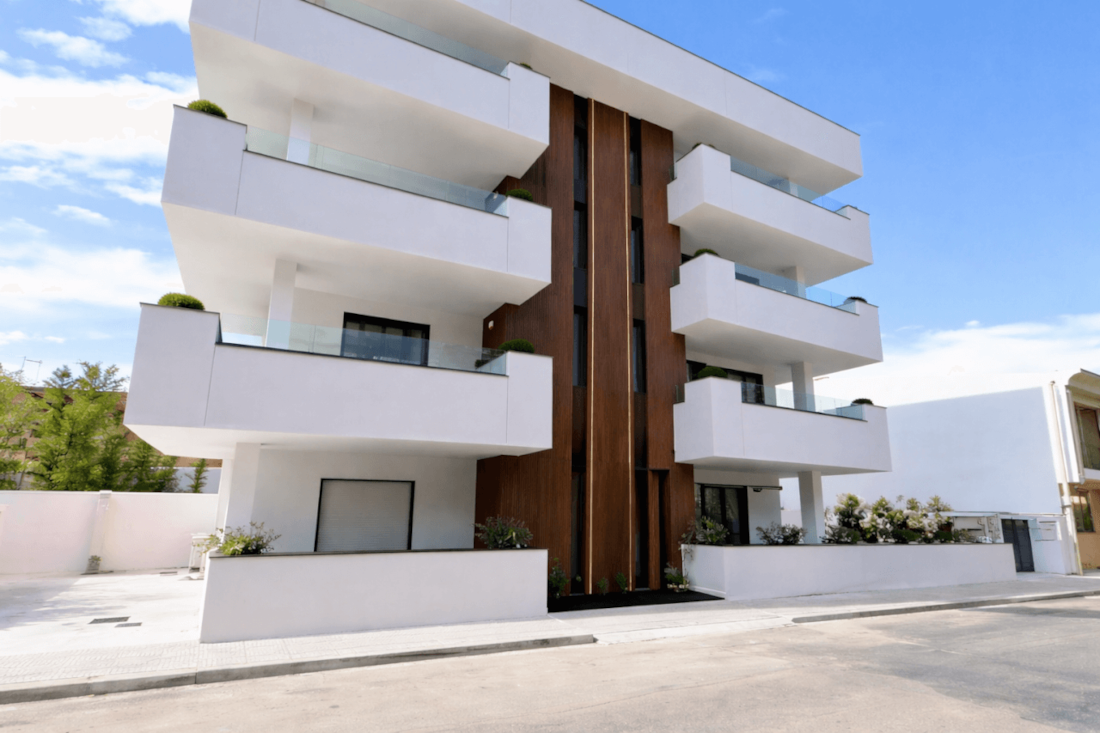
Since 2021, RENTAL12 operates 37 properties across Sardinia. Over 15,000+ guests from 47 countries have stayed year-round. The safety record is unambiguous:
Zero
violent crime
Zero
thefts
Zero
break-ins (occupied)
Zero
police incidents
Zero
terrorism threats
Only incidents in 4.5 years:
2 medical emergencies · 3 traffic incidents · 4 lost items (all resolved)
Compare: Barcelona (pickpocketing in Gothic Quarter), Rome (bag snatching near Colosseum), Paris (metro theft), Milan (car break-ins). Sardinia's safety profile is objectively different.
What to Actually Worry About
Coastal Waters
Strong currents and drownings are real risks.
Mitigation: use guarded beaches, respect warning flags.
Rural Roads
Winding roads and loose livestock pose hazards.
Mitigation: drive slowly, avoid driving at night.
Summer Wildfires
June–September risk during dry months.
Mitigation: check alerts, never light open fires.
Flash Flooding
October–November risk in low-lying areas.
Mitigation: avoid underpasses, monitor weather alerts.
Protected Flora & Fauna
Taking sand or shells is illegal.
Penalty: €500–€3,000 fines. Leave only footprints.
Notice what's missing?
Terrorism. Pickpocketing. Vehicle theft. Organized crime.
Leadership Perspective
"We host families, solo travelers, elderly couples. In 4.5 years, not one safety incident validates Canada's warning. When a government advisory tells travelers to exercise 'high caution' in Olbia—a city with lower crime than Ottawa—it spreads fear based on geography, not data."
CFO
"Blanket advisories are intellectually lazy. Sardinia and Milan cannot use the same framework—crime rates differ 4x. Say: 'Exercise caution in major cities. Sardinia presents significantly lower risk.' That's honest. Lumping Oristano with Milan is administrative convenience at accuracy's expense."
COO
"I walk through Olbia at midnight. My daughter plays in the park unsupervised. These aren't things I'd do in Rome or Milan. When guests read Canada's advisory and ask 'Is it dangerous?'—we show them data. That conversation shouldn't be necessary."
Cost of Inaccurate Advisories
Reputational Harm
Decades of Sardinia reputation building undermined by copy-paste warnings.
Economic Damage
Tourism is Sardinia's primary industry; small operators punished for crimes elsewhere.
Misinformed Travelers
Confusion erodes trust in government advisories and misdirects caution.
What a Good Advisory Would Look Like
"Exercise a high degree of caution in Italy's major cities (Rome, Milan, Florence, Naples) and transport hubs due to elevated risk of terrorism and petty crime. Rural regions and islands, including Sardinia, Umbria, and Abruzzo, present significantly lower risk. Standard travel precautions apply."
This template replaces vague language with geographic and activity-based differentiation. Risk assessment becomes proportionate rather than reflexive. Operators can quote it; travelers can plan accordingly.
Conclusion: Data Over Geography
To travelers: Sardinia is measurably safer than major Italian cities. Use data, not advisories written in 2004. Walk the streets. Trust your surroundings.
To policymakers: Risk communication requires specificity. Blanket warnings damage your credibility and harm communities you intend to protect. Invest in regional risk assessment.
To STR operators: This is your fight. Document incidents, compile regional data, challenge advisories. Your voice and numbers matter.
Frequently Asked Questions
Operator Analysis: Systemic Problems with One-Size-Fits-All Risk Communication
Problem 1: National-Level Templates
Governments use one advisory for entire countries. Italy's heterogeneous geography makes this indefensible.
Problem 2: Imported Language
Phrases copy-pasted across decades without regional verification. Sardinia suffers from language written in 2004.
Problem 3: No Data Transparency
Advisories never cite specific incidents, crime rates, or regional statistics. Assertions without evidence.
Problem 4: No Update Mechanism
Advisories remain static even when conditions improve. No formal review triggers when incidents decline.
What This Means for STR Operators
- Organize. Form regional/national STR associations. Compile incident data. Challenge advisories publicly.
- Document. Meticulously record every safety metric. Make the case your government won't.
- Collaborate. Partner with tourism boards, police, mayors. Provide data governments can adopt.
- Communicate. Write to your government's advisory office. Demand regional assessment.
Your voice and data matter. Your livelihood is on the line. Demand precision.
Sources
Crime Statistics
- Il Sole 24 Ore crime indices
- ISTAT national crime data
- L'Unione Sarda regional reporting
- Numbeo comparative crime database
- Statistics Canada crime surveys
Government Sources
- Canada travel advisory (GOV.CA)
- Attorney General statements 2023
- Polizia di Stato reports
- Carabinieri regional data
- Sardinia region public safety
Safety Analysis
- movingto.com Sardinia guides
- strictlysardinia.com community
- liveandinvestoverseas.com reports
- mustseespots.com safety analysis
- RENTAL12 operational data
Methodology: Cross-referenced crime statistics, government reports, operational data, and travel experience accounts. No single source cited without corroboration.
Related Reading
RENTAL12 Ecosystem
Sardinia Context
Market Intelligence
Methodology & Citation
Research Methodology
- Government travel advisory analysis (Canada, UK, US, Australia)
- ISTAT crime data (2020–2025) by region
- Polizia di Stato & Carabinieri incident reports
- RENTAL12 operational records (2021–2026)
- Peer STR safety benchmarks
- Media reporting & regional analysis
Cite This Article
RENTAL12. "Sardinia Safety: The Truth Beyond Government Advisories." News & Analysis, 1 January 2026. rental12.com/en/news
Full citation with author, publication date, and source URL.
Experience Sardinia's Safety for Yourself
Explore our AZULIS collection of luxury apartments with 24/7 managed security, or browse properties across Sardinia's safest regions. Data-driven. Guest-trusted. Europe's premier island awaits.