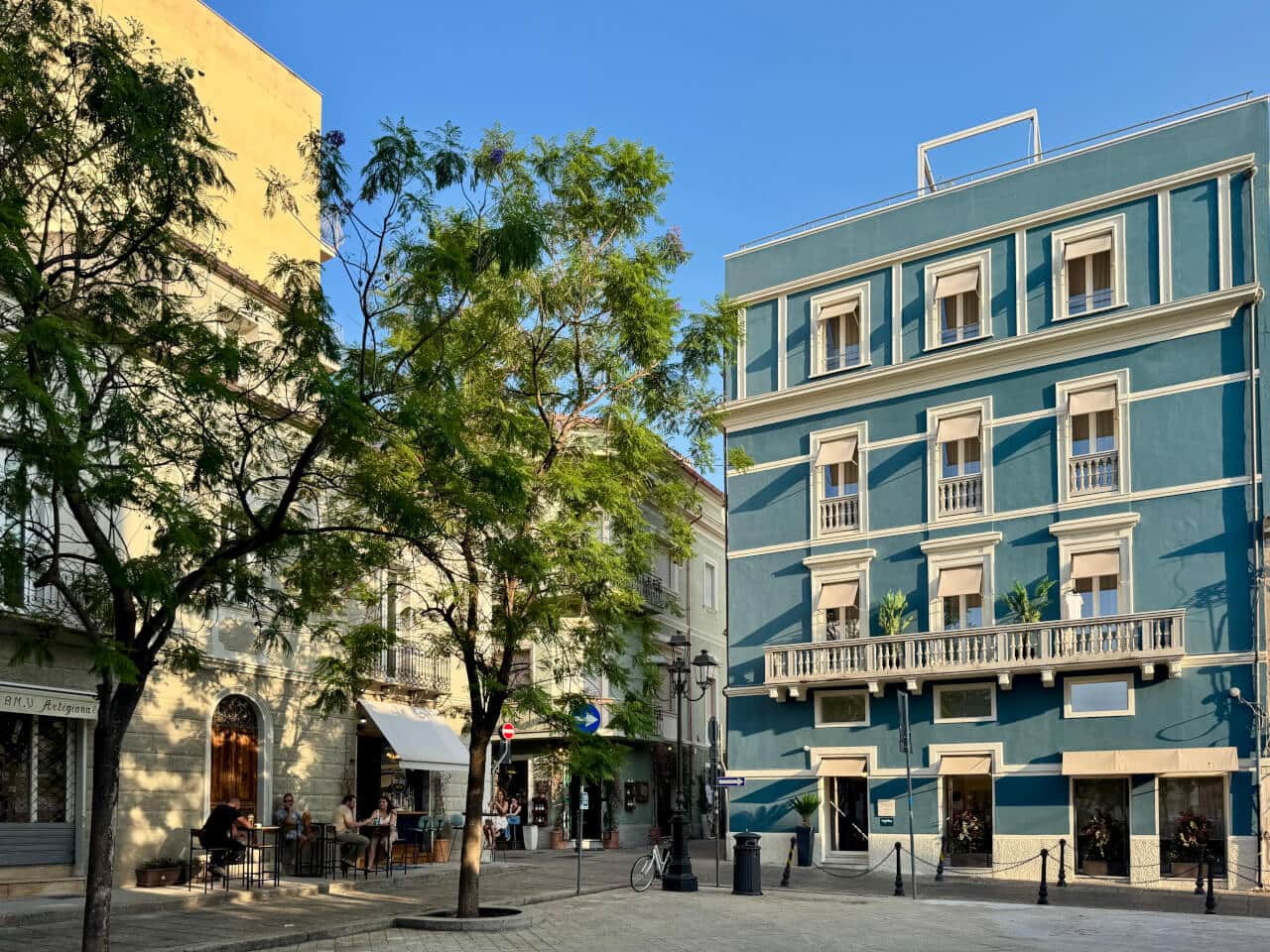
Square in Olbia historical center — Foto RENTAL12
Italy Has 8 Million Vacant Homes — and Only 600,000 Short Lets
By Floriana Panvini Rosati · 10 min read · 2 July 2026
Published: 02 Jul 2026 · Impact: High (Market)
Quick Guide
New national data lands on the side of Olbia's numbers. SoloAffitti's Rentvolution analysis, presented at Palazzo Madama on 16 April 2026, counts roughly 8 million vacant homes in Italy against 4.3 million rented and 500,000–600,000 short lets. The homes exist; owners keep them closed because 87% fear rent arrears and 62% fear slow evictions. Italy issued 40,158 eviction orders in 2024 alone.
What to do right now
Live tools for your Olbia stay
Real-time helpers that update every day with Sardinia conditions.
One Rented Home for Every Two Left Empty
Quick answer: SoloAffitti's Rentvolution analysis counts about 8 million vacant properties in Italy against 4.3 million rented homes and 500,000–600,000 short-term rentals. Roughly one home is rented for every two standing empty — the stock exists, but a large share sits outside the market entirely.
The analysis was presented on 16 April 2026 in the Sala Koch of Palazzo Madama in Rome, inside the parliamentary debate on the rent bill promoted by Senator Massimo Garavaglia. Its core finding, first reported by Il Sole 24 Ore, reads like a correction to three years of public debate: Italy's housing emergency is not a shortage of buildings. It is a shortage of buildings on the market.
The official statistics agree on the scale. ISTAT's 2021 permanent census counts 35,271,829 dwellings in Italy, of which 9,581,772 — 27.2% — are unoccupied by any resident. SoloAffitti's narrower estimate of 8 million "actually vacant" homes strips out units occupied by non-residents, and still dwarfs every other category in the market.
Set the short-term rental sector against those figures and the proportions become hard to ignore. At the study's upper bound of 600,000 active short lets, vacant homes outnumber them by more than 13 to one. Even if every short-term rental in the country converted to a long-term lease tomorrow, more than 90% of Italy's unused stock would remain exactly where it is: closed, shuttered, off the market.
The Fear Economy: Why Owners Choose Empty Over Rented
Quick answer: 87% of surveyed owners name non-payment of rent as their main concern and 62% fear a long eviction procedure. Italy issued 40,158 eviction orders in 2024, over 1.1 million since 2004. For most small landlords, leaving a property empty is risk reduction, not neglect.
The study's most useful contribution is motive. Among a representative sample of owners, 87% put rent arrears at the top of their concerns; 62% fear the length and stress of repossession if a tenant stops paying. The two fears compound each other: a default only becomes a catastrophe when the owner cannot recover the property within a predictable timeframe.
The fear has a documented history. Beyond the 40,158 eviction orders issued in 2024, Italy has accumulated over 1.1 million orders since 2004 and an estimated 2 million since 1978 — what the study calls a "long memory of eviction" that shapes decisions even among owners who have never had a bad tenant. Protection remains thin: 80% of landlords rely solely on the security deposit, typically two to three months of rent.
Who are these owners? Mostly not investors. Only 29% approach their property with a fully economic logic; 36% inherited it and 28% keep an emotional attachment to it. When the choice is framed as security rather than yield, an empty apartment stops looking irrational. The same logic explains why some owners who do rent choose the short-term formula: 25% cite lower arrears risk and 33% cite the speed of getting the property back when needed.
"The rental market is changing. Demand is growing, but supply remains static. To get it moving again we need to make renting more attractive to landlords, intervening on three levers: contract flexibility, taxation and security." — Silvia Spronelli, CEO of SoloAffitti, Rentvolution presentation, Rome, April 2026 (as reported by Il Sole 24 Ore)
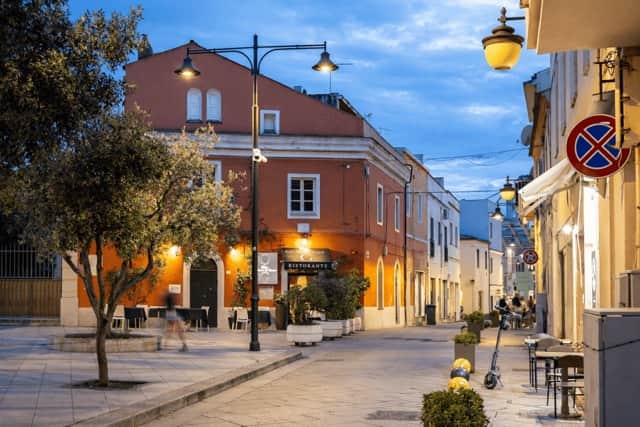
Evening shot of Olbia city center near Officina del Gusto — Foto RENTAL12
Sardinia Already Told This Story: the Olbia Mirror
Quick answer: The Islands macro-region has Italy's highest unoccupied-dwelling share at 34.9% (ISTAT 2021). Olbia counts 10,777 empty homes against 3,128 short-term rental listings, and an AIGAB survey found only 2.2% of Sardinian STRs were converted from long-term leases. The national data now confirms the local pattern.
Nowhere is the vacancy paradox sharper than in the Islands. ISTAT's census assigns Sardinia and Sicily together the highest unoccupied share of any Italian macro-region: 34.9% of dwellings, against a national average of 27.2%. Roughly one home in three stands empty — and the region's occupied stock grew slowest of all in the 2011–2021 decade, at +5.5%.
In May, a RENTAL12 analysis of Olbia's own housing data documented the local version of exactly this pattern: 10,777 empty homes in the city against 3,128 short-term rental listings — about 7.5% of the housing stock — with an AIGAB survey showing that only 2.2% of Sardinian short lets were ever converted from a long-term lease. The remainder came out of vacancy or renovation, not out of the residential market. What was then a local rebuttal to a local newspaper claim now has a national dataset behind it, extending the argument of our earlier rebuttal of the STR housing-crisis myth.
The proportions differ in an instructive way. Olbia's vacant-to-short-let ratio of roughly 3.4 to 1 is far tighter than the national 13-plus to 1, because a working tourism economy gives owners a route to keep property active without exposure to arrears risk. Where that route doesn't exist, homes don't flow into long-term leases — they simply close.
Sources: SoloAffitti Rentvolution via Il Sole 24 Ore (Apr 2026); ISTAT Censimento Permanente 2021; AIGAB; RENTAL12 Olbia analysis (May 2026)
What the Garavaglia Bill Proposes — and What It Means
Quick answer: The rent bill promoted by Senator Massimo Garavaglia proposes shorter, more flexible contract formulas, stronger references to market values, better rent-guarantee instruments and faster repossession. Industry bodies back the direction but argue landlord confidence — not restrictions on short lets — decides whether 8 million homes return to the market.
SoloAffitti's proposals slot into the bill's framework: contract durations closer to the real average stay (just over two years, against far longer formal terms), transparent rent benchmarks, guarantee instruments beyond the deposit, and — the point every speaker returned to — certain timeframes for getting a property back when the tenant stops paying. The company also proposes tax exemption on rents for a defined period, within set ceilings, to fund the renovation of homes that are empty simply because their owners cannot afford to fix them.
Francesco La Commare, deputy national vice-president of estate-agent federation Fiaip, told the same event that the transitional-lease rules of Law 431/98 are "no longer fully adequate" for a market defined by labour mobility and flexible housing demand (Il Sole 24 Ore, April 2026). The sharpest framing, though, came from the real-estate wing of Confassociazioni:
"The housing emergency does not depend on a lack of houses, but on an offer that is not activated due to a lack of confidence. Limiting short-term rentals is not the solution: what is needed is a national strategy to make medium to long-term rentals more secure." — Gian Battista Baccarini, President of Confassociazioni Real Estate, Rentvolution presentation, April 2026 (as reported by Il Sole 24 Ore)
For guests and operators in Sardinia, the practical read is simple. Regulation of short lets continues to tighten — the EU data-sharing regulation and Italy's CIN regime already require registration and fine non-compliance up to €8,000 — but the policy conversation in Rome has visibly shifted from "tourism takes homes away" to "how do we give owners the confidence to open 8 million doors." Compliant, registered hospitality is not the problem in that equation; it is one of the few things keeping historic-centre buildings inhabited, maintained and lit in the evening.
Update history
2 July 2026 — Initial publication. Sources: SoloAffitti Rentvolution analysis via Il Sole 24 Ore (15 Apr 2026, Laura Cavestri); ISTAT Censimento Permanente 2021 (release 1 Aug 2024); AIGAB Sardinia survey; Ministero del Turismo BDSR; RENTAL12 Olbia housing analysis (21 May 2026).
Frequently Asked Questions
Do short-term rentals cause Italy's housing shortage?
Are short-term rentals like Airbnb the reason Italy has a housing shortage in 2026?
No single factor explains it, but the numbers point elsewhere: Italy has roughly 8 million vacant homes against 500,000-600,000 short-term rentals, and 87% of owners name fear of rent arrears — not tourism — as the reason they keep properties off the market (SoloAffitti Rentvolution, April 2026).
The scale difference matters: even a total conversion of every short let in the country would touch less than a tenth of the unused stock. The study locates the blockage in landlord confidence — arrears risk and slow repossession — not in how the small rented fraction is used.
How many homes in Italy are vacant?
How many vacant or unoccupied homes does Italy have according to official data?
ISTAT's 2021 permanent census counts 9,581,772 unoccupied dwellings — 27.2% of Italy's 35,271,829 homes — while SoloAffitti's April 2026 Rentvolution analysis estimates about 8 million properties actually vacant.
The gap between the two figures is definitional: ISTAT's count includes homes used by non-residents (second homes among them), while the Rentvolution estimate isolates properties genuinely out of use. Either way, more than one Italian home in four has no resident.
Why do Italian owners leave homes empty?
Why do Italian property owners prefer to leave homes empty instead of renting them out?
87% of owners fear non-payment of rent and 62% fear long eviction procedures; 80% rely only on a 2-3 month security deposit, and Italy issued 40,158 eviction orders in 2024 — over 1.1 million since 2004 (SoloAffitti Rentvolution via Il Sole 24 Ore, April 2026).
Most owners are not professional investors: 36% inherited their property and 28% keep an emotional attachment to it. For them the decision is about perceived security rather than yield, so an empty home reads as the low-risk option.
Is the vacancy pattern the same in Sardinia and Olbia?
Does Sardinia — and Olbia specifically — show the same vacant-homes pattern as the national Italian data?
Yes, amplified: the Islands macro-region has Italy's highest unoccupied-dwelling share at 34.9% (ISTAT 2021), Olbia counts 10,777 empty homes against 3,128 short-term rental listings, and only 2.2% of Sardinian STRs were converted from long-term leases (AIGAB).
Olbia's short lets account for about 7.5% of the city's stock while empty homes exceed them three to one. The May 2026 Olbia analysis found essentially none of those short lets were withdrawn from the long-term market — they were recovered from vacancy and renovated.
Related News
Stay in a home that was brought back to life
RENTAL12 operates 37 owned, CIN-registered apartments and villas in Olbia and Golfo Aranci — historic-centre buildings recovered from vacancy, backed by 2,000+ 5 star reviews.
Book direct Trust Hub